
By Dennis Ocasio | Ocasio Consulting | Alafaya, FL | Updated March 2026
From the auditor: Dennis Ocasio has delivered digital marketing for 200+ small businesses across Central Florida over 30+ years. Every recommendation here comes from tested, real-world client work — not theory.
TL;DR:
How AI is changing SEO comes down to one shift — the goal used to be ranking #1. Now it’s being the source AI cites when it answers your customer’s question. The traffic math changed. The conversion math got better. And the businesses that adapt first are pulling ahead fast.
How AI is changing SEO is the question I get more than any other from small business owners right now. And the version I usually hear sounds something like: “Dennis, my traffic dropped and I don’t know why. Is SEO even worth it anymore?”
I’ve been in this business for nearly 30 years. I’ve been through every major Google update — Panda, Penguin, Hummingbird, RankBrain, the Helpful Content update, and now this AI wave. Every time, two groups of businesses emerged: the ones who panicked and stopped investing, and the ones who leaned in, adapted, and ended up with less competition and more customers. The second group always wins.
This post is the complete picture — the honest, plain-English version of what is actually changing, backed by fresh data from Ahrefs, Semrush, Search Engine Land, and SparkToro — along with what it actually means for a local service business in Central Florida trying to get found online.
This is the capstone post for everything I’ve covered in this series: how to get in Google AI Overviews, what generative engine optimization is, AI SEO for small business, and schema markup for small business websites. If you’ve read those — you’re ready for this one. If this is your entry point — welcome. Start here and go deeper from any link in this post.
Let’s Be Honest About What Changed — And What Didn’t
I want to cut through the noise before we get into tactics. Here’s what the data actually says about where we are right now:
Google Is Still the Dominant Force
According to a SparkToro 2025 survey, Google processes 14 billion search queries daily. ChatGPT handles 37.5 million — a ratio of 373 to 1 in Google’s favor. AI tools are growing fast. But traditional search is not dead. Not even close. If anyone tells you SEO is over, they’re wrong. SEO traffic still outpaces AI search traffic by roughly 34 to 1, according to WordStream’s 2026 Small Business Website Trends Report.
But the Rules Inside Google Changed
Here’s where it gets real. Ahrefs analyzed 300,000 keywords and found that organic click-through rate for position-1 results drops an average of 34.5% when an AI Overview appears. Seer Interactive tracked year-over-year CTR movement and found it fell from 1.41% to 0.64% for queries now dominated by AI Overviews. You can still rank first — and get significantly fewer clicks than you used to.
And the Visitors Who DO Come Are More Valuable
Here’s the part most people miss: AI-referred visitors convert at 4.4 times the rate of traditional organic visitors (Semrush, July 2025). AI search traffic grew 527% year over year across tracked sites (Search Engine Land, 2025). The volume is smaller. The quality is dramatically higher. The math is actually working in your favor — if you’re in the AI answer.
Dennis’s take: This isn’t doom. This is a reset. The businesses that built authority on cheap tactics — thin content, keyword stuffing, spammy backlinks — are getting hit hardest. Businesses built on real expertise and genuine helpfulness? They’re the ones AI is recommending. That’s always been our play.
Old SEO vs. AI SEO: What Actually Changed
Let me lay this out side by side, because the contrast is the clearest way to understand what needs to shift in your strategy:
| What Changed | Old SEO (pre-2024) | AI SEO (2026) |
| Goal | Rank #1 for keywords | Be cited as THE authority source |
| Keyword strategy | Keyword density + exact-match targeting | Topical authority + semantic clusters |
| Success metric | Rankings and organic traffic volume | AI citation rate + conversion quality |
| Content priority | Volume — publish more pages | Depth — one comprehensive guide beats ten thin posts |
| Backlinks | Primary trust signal — more = better | Still matters, but brand mentions now outperform links (0.664 vs 0.218 correlation) |
| Clicks | Goal is traffic to your site | AI users convert 4.4x higher — fewer clicks, better leads |
| Technical SEO | Site speed, mobile, crawlability | All that PLUS structured data, entity clarity, answer-first structure |
| E-E-A-T | Nice to have for YMYL topics | Required for everything — AI won’t cite sources it can’t verify |
| Where to optimize | Google only | Google + ChatGPT + Perplexity + Bing Copilot + Reddit + LinkedIn |
| Content freshness | Update when you have time | Cited content averages 6 citations vs 3.6 for outdated pages |
The single most important number in that table: brand mentions now correlate at 0.664 with AI Overview appearances, while backlink count correlates at only 0.218 (Position Digital, 2026). For 20 years, backlinks were the primary currency of SEO authority. That is still true for traditional rankings — but for AI citations, what gets you cited is being talked about across the web, not just linked to. Your Google Business Profile reviews. Your name in a local news story. A podcast interview. A mention in an industry roundup. That’s what AI systems are looking for.
The Stats That Tell the Full Story

I don’t want to just give you opinions. Here’s the data that every small business owner and entrepreneur should understand heading into the second half of 2026:
| What the Data Shows | The Stat | Source |
| Google processes this many times more daily queries than ChatGPT | 373:1 ratio | SparkToro survey, 2025 |
| Organic CTR drop for position-1 results when AI Overviews appear | 34.5% average drop | Ahrefs, 2025 (300K keywords) |
| Year-over-year CTR decline organic positions due to AI Overviews | 1.41% → 0.64% | Seer Interactive, 2025 |
| AI-referred visitors convert vs. traditional organic visitors | 4.4x higher rate | Semrush, July 2025 |
| AI search traffic growth year over year across tracked GA4 sites | +527% YoY | Search Engine Land, 2025 |
| Branded web mentions correlation with AI Overview appearances | 0.664 correlation | Position Digital, 2026 |
| Backlink count correlation with AI Overview appearances | Only 0.218 | Position Digital, 2026 |
| Question-based queries that display an AI Overview | 57.9% | Position Digital, 2026 |
| Small businesses investing in SEO monthly | 74% / avg $497/mo | AIOSEO statistics, 2026 |
| Gen Z users searching via AI chatbots instead of Google | 35% | Multiple sources, 2025 |
| AI tools improve SEO rankings when used strategically | Up to 49.2% | Semrush, 2025 |
| LLM citation sources: 44.2% of all citations come from | First 30% of text | Growth Memo, Feb 2026 |
Sources: SparkToro, Ahrefs, Seer Interactive, Semrush, Search Engine Land, Position Digital, SE Ranking, AIOSEO, Growth Memo — 2025–2026
Two stats I want to call out specifically. First: 57.9% of question-based queries now display an AI Overview. That is the majority of how-to, what-is, and why-does queries in your market. If your content is not written to answer questions directly, you are missing more than half the AI visibility landscape. Second: 44.2% of all LLM citations come from the first 30% of an article (Growth Memo, February 2026). Your first two or three paragraphs are doing the heaviest lifting for AI citation. How you open a post has never mattered more.
5 Specific Ways AI Is Changing How SEO Works
1. Keyword Research Shifted From Volume to Intent
Traditional keyword research was about finding the most-searched phrase and targeting it. AI search does not work that way. Google’s AI Mode uses what’s called “query fan-out” — it simultaneously runs dozens of sub-searches around your original query to build a synthesized answer. According to Google CEO Sundar Pichai, AI Mode queries are on average 2–3 times longer than traditional Google searches. People are typing full questions: “what type of web designer should I hire for a service business in Orlando” — not just “web designer Orlando”. If your content doesn’t answer the full question, it doesn’t get cited.
2. Topical Authority Replaced Single-Page Optimization
AI search systems build a picture of your expertise by reading everything you have published on a topic, not just one page. A business that has published a cluster of related, deeply researched posts on web design — pillar guide, supporting posts, FAQs, local pages, case studies — signals comprehensive authority. A business with one decent homepage? Gets ignored. This is exactly why I have been building this entire blog series for Ocasio Consulting: not just individual posts, but a linked, structured topic cluster that AI can trace from edge to center.
3. E-E-A-T Became the Foundation, Not a Checkbox
Google added “Experience” to its quality framework (E-A-T became E-E-A-T) specifically because AI-generated content can sound authoritative without actually being written by anyone who has lived it. Search Engine Journal’s 2026 analysis puts it plainly: AI systems are risk-averse. They trust recognized experts over anonymous sources. Proving your experience — with author bios, first-person stories, case studies, real data from your own work — is now required, not optional. My 30 years in this industry is not a marketing claim on my About page. It is an E-E-A-T signal that AI systems use to decide whether to cite me.
4. Where You Optimize Expanded Beyond Google
The search ecosystem has fractured. Yes, Google still gets 90%+ of search traffic. But 35% of Gen Z users research through AI chatbots first (multiple sources, 2025). ChatGPT now processes 2.5 billion prompts a day. Perplexity passed 15 million daily actives. Your potential customer might ask any of those platforms about your service. Each one has its own citation logic. The businesses that win are building brand presence across all of them simultaneously — not just Google. That means consistent content, consistent reviews, and consistent entity information everywhere your business exists online.
5. Technical SEO Got More Specific
Page speed has always mattered. Now it has a citation-level impact. SE Ranking’s November 2025 analysis found that fast-loading pages (under 0.4 seconds) average 6.7 AI citations, while slow pages (over 1.13 seconds) get just 2.1. Schema markup — the structured code that tells AI what your business does — now increases AI citation rates by 36%. And entity consistency across your GBP, website, social profiles, and directories is the cross-platform trust signal that confirms to AI systems: this business is real, established, and legitimate.
The 8 Moves That Win in AI-Powered Search
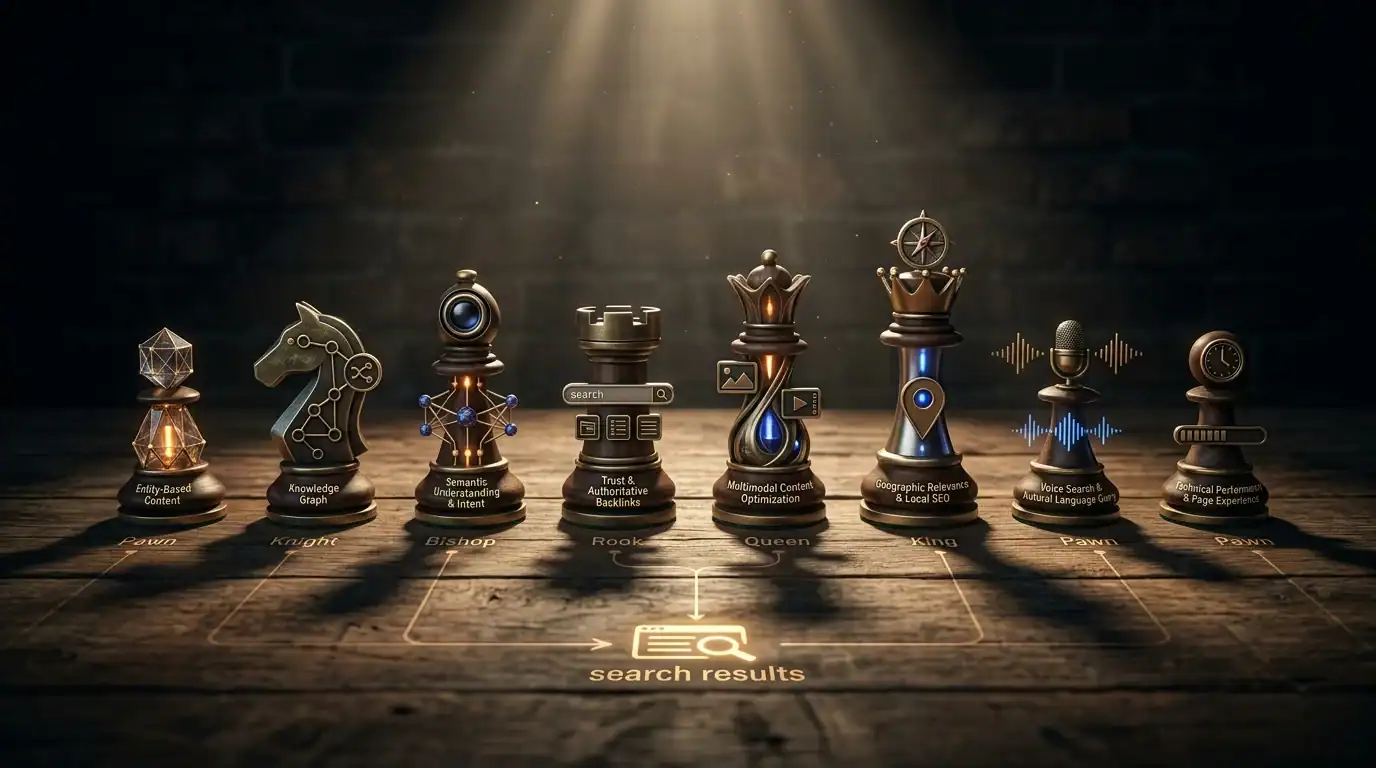
Here is the complete action plan — pulled straight from the research and everything I’ve seen working for the clients I work with across Central Florida:
| Move | What To Do | The Payoff |
| 1. Build Topical Clusters | Create pillar pages + supporting posts covering every angle of your core topics | AI query fan-out pulls from your cluster, not one page |
| 2. Answer-First Writing | Answer the main question in the first 100 words of every post and service page | 44% of all AI citations come from the first 30% of text |
| 3. Add Schema Markup | FAQPage, LocalBusiness, Article, Service schema on all core pages | 36% higher AI citation rate + 20–40% CTR boost from rich results |
| 4. Build Brand Mentions | Get cited in local publications, podcasts, directories, industry blogs | Brand mentions (0.664) outperform backlinks (0.218) for AI citation |
| 5. Refresh Content Regularly | Update your top posts with fresh data every 3–6 months | Fresh content averages 6 citations vs 3.6 for outdated pages (SE Ranking) |
| 6. Show Real Experience | Add author bios, case studies, first-person stories — prove you lived it | E-E-A-T is the #1 trust signal AI uses to decide who to cite |
| 7. Go Multi-Platform | Be active on Google Business Profile, LinkedIn, Reddit threads, local directories | Cross-platform entity consistency = 4x higher AI citation probability |
| 8. Write Longer and Deeper | Target 1,500–2,500 words with 120–180 words between headings | Pages over 2,900 words average 5.1 AI citations vs 3.2 for short content |
You do not need to do all 8 at once. Pick the two that are most broken on your site right now and fix those first. In my experience with local service businesses, the fastest wins are almost always: (1) rewriting service page openings to answer the main question in the first paragraph, and (2) adding FAQ schema. Those two moves alone can shift your AI visibility within 30–60 days.
What This Means Specifically for Small Service Businesses in Central Florida
I want to get local here, because I serve local businesses — web designers, HVAC companies, dentists, contractors, landscapers, consultants, salons — across the Orlando metro and Central Florida. Here’s what the AI shift means specifically for you:
- Local queries are triggering AI Overviews at growing rates. Queries with local intent trigger ChatGPT web searches in 59% of instances (Nectiv, October 2025). Your competitor across town is already showing up in those answers — or they are not, and there’s your gap.
- Your Google Business Profile is now part of your AI strategy. Google AI Mode and AI Overviews pull from GBP data. Consistent business name, complete services list, active review accumulation, and regular GBP posts all feed AI systems the signals they need to recommend you.
- Smaller domains have more to gain from content length. SE Ranking found that for smaller domains, content length has roughly 65% more impact on ChatGPT citations than it does for large authority domains. This is a genuine equalizer. A well-written 2,000-word guide from a local web design firm in Alafaya can outperform a thin post from a national agency if the local guide is more specific, more structured, and more helpful.
- Topical authority is achievable at the local level. You do not need to compete with national brands across all keywords. You need to be the undisputed authority on web design, SEO, and digital marketing for Central Florida service businesses. That’s a winnable fight. And it’s exactly what this entire blog cluster is building toward.
I wrote a full breakdown of the local SEO strategy for service area businesses that goes deeper on the geo-specific side of this. Read that next if you want the local tactics alongside the AI strategy.
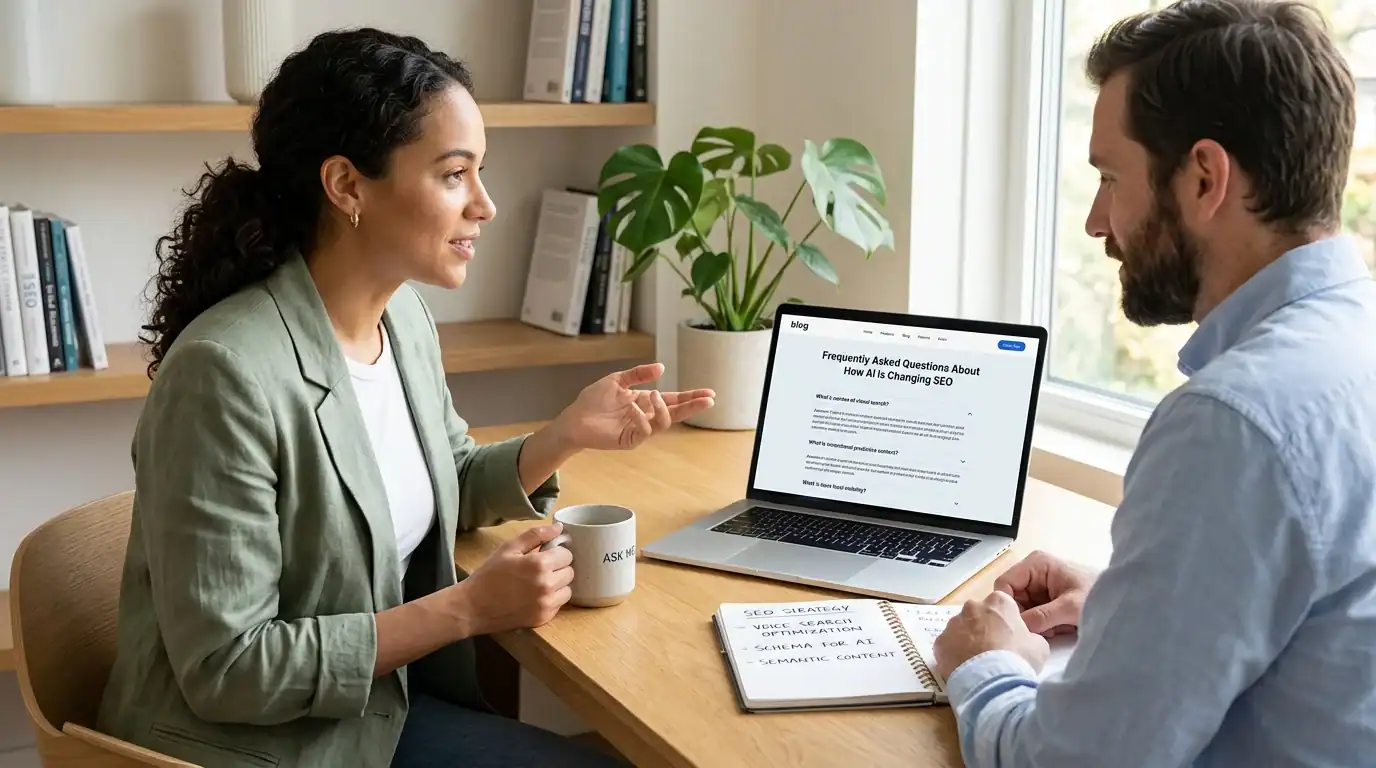
Frequently Asked Questions About How AI Is Changing SEO
Is SEO dead because of AI?
No — and the data backs this up. Google still processes 14 billion queries daily vs. 37.5 million for ChatGPT. Traditional organic search still delivers roughly 34 times more traffic than AI tools. What changed is how SEO works, not whether it works. The tactics that are dying are the shortcuts: keyword stuffing, thin content, generic blog posts. The fundamentals — real expertise, structured content, technical cleanliness, E-E-A-T — are more valuable than ever because they’re what AI systems are built to reward.
How do I know if AI is affecting my traffic?
Open Google Search Console and look at your impressions vs. clicks over the past 12 months. If impressions are flat or growing but clicks are declining — that is the AI Overview effect. You are showing up more, but Google’s AI answer is satisfying the query before users click through. The fix is not to give up — it’s to become the source AI cites, which increases your CTR by 35% compared to businesses not cited (Seer Interactive, 2025). Also check GA4 for sessions from chatgpt.com, perplexity.ai, and gemini.google.com — that’s your AI referral traffic baseline.
Does AI-generated content rank on Google?
Yes — but only when it’s done correctly. Google’s position is clear: they penalize low-quality, unhelpful content regardless of how it was created. High-quality AI-assisted content that is fact-checked, edited for accuracy, written in a distinct human voice, and genuinely helpful for the reader can and does rank. What gets penalized is the “set it and forget it” mass-published AI content with no editing, no sourcing, and no original insight. AI is a research and drafting accelerator. Human expertise, judgment, and voice are what make the content worth citing.
What is the single most important SEO change for small businesses in 2026?
Build topical authority through a structured content cluster. Stop publishing random blog posts and start publishing interconnected, deeply researched content that covers your core topic from every angle. One pillar guide, five to ten supporting posts, FAQ content, local pages — all internally linked, all citing real sources, all written in your authentic expert voice. That cluster tells AI systems: this business is the authority here. It’s how you win both traditional rankings and AI citations simultaneously.
How long does it take for AI SEO changes to show results?
It depends on the change. FAQ schema and page speed improvements can show citation impact within 2–4 weeks. Content refreshes on existing posts often see movement within 30–60 days. Building full topical authority through a content cluster is a 3–6 month project — but the compounding return is significant and durable. The businesses I’ve seen win fastest are the ones who make a committed 90-day push on content structure and technical cleanup, then maintain consistency month over month.
Do I still need to build backlinks for SEO?
Backlinks still matter for traditional Google rankings — they remain a key trust signal in the core algorithm. But for AI citation specifically, brand mentions now outperform backlinks as a citation predictor (0.664 vs 0.218 correlation, Position Digital 2026). The best approach in 2026 is an integrated one: earn backlinks through great content and digital PR, while simultaneously building brand mentions through reviews, local citations, podcast appearances, and community engagement. Both signals feed both channels.
You Can’t Afford to Wait on This
How AI is changing SEO is no longer a future-state question. It’s a this-quarter, this-month, this-week question. The businesses appearing in AI Overviews, ChatGPT answers, and Perplexity results in your market today did not get there by accident. They built content clusters. They added structured data. They got consistent reviews and citations across the web. They wrote for depth instead of volume.
I have been building this exact strategy for Ocasio Consulting and our Central Florida clients for the past two years. The window to get ahead of your local competitors is still open — but it narrows every month as more businesses figure this out.
At Ocasio Consulting, we design AI-ready websites, build content strategies that work for both Google and generative AI, and help local service businesses establish the topical authority that gets them cited and chosen. Family-owned. Alafaya-based. In this game since 2013.
See our SEO services or request a free website and SEO consultation. We’ll audit your current AI visibility, show you where your competitors are outranking you in AI answers, and build you a concrete 90-day plan to close the gap.
Also in this series: How to Get in Google AI Overviews | What Is Generative Engine Optimization? | AI SEO for Small Business | Schema Markup for Small Business Websites
About the author: Dennis Ocasio co-founded Ocasio Consulting in 2013 with his wife Lisa. They help service-based small businesses across Central Florida get found online through AI-ready web design, SEO, and digital marketing. Dennis brings nearly 30 years of advertising, design, and search experience to every engagement. Learn more about the team.
📌 INTERNAL LINKING CHECKLIST (for the editor)
| Anchor Text | URL | Role |
| how to get in Google AI Overviews | https://yourgraphicdesign.guru/how-to-get-in-google-ai-overviews/ | Cluster pillar — links UP |
| what generative engine optimization is | https://yourgraphicdesign.guru/what-is-generative-engine-optimization/ | Sibling — GEO post |
| AI SEO for small business | https://yourgraphicdesign.guru/ai-seo-for-small-business/ | Sibling — AI SEO overview |
| schema markup for small business website | https://yourgraphicdesign.guru/schema-markup-for-small-business-website/ | Sibling — schema post |
| entity optimization for SEO | https://yourgraphicdesign.guru/entity-optimization-for-seo/ | Related cluster |
| local SEO for service area businesses | https://yourgraphicdesign.guru/local-seo-for-service-area-businesses/ | Local SEO cluster |
| local SEO services Orlando | https://yourgraphicdesign.guru/local-seo-services-orlando/ | Geo authority |
| web design services | https://yourgraphicdesign.guru/web-design-services/ | Service page CTA |
| SEO services | https://yourgraphicdesign.guru/search-engine-optimization-services/ | Primary SEO CTA |
| free consultation | https://yourgraphicdesign.guru/contact-us/ | Conversion CTA |
| Ocasio Consulting home | https://yourgraphicdesign.guru/ | Brand homepage |
| about the team | https://yourgraphicdesign.guru/who-is-ocasio-consulting/ | E-E-A-T / author credibility |
🔁 REDIRECT NOTE
Important: After publishing at /how-ai-is-changing-seo/, set up a 301 redirect from the old URL /how-ai-is-changing-seo-and-web-design/ to the new one. This preserves any existing link equity and consolidates authority into the updated, fully optimized post.
If this raised more questions than it answered, we’ve got answers to common SEO questions in our FAQ — covering everything from pricing and timelines to what results actually look like. You can also read verified client reviews from businesses we’ve helped across Orlando and Central Florida.