
LinkedIn for B2B: How to Build Authority and Generate Leads in 2026
LinkedIn for B2B is the most underrated marketing channel for professional services and B2B businesses. I’ve been helping clients with their LinkedIn presence for years, and the ones who commit to it consistently get what every business owner wants: real phone calls from qualified prospects who already trust their expertise before the first conversation happens.
The numbers back this up. 80% of B2B leads from social media come from LinkedIn. Not Facebook. Not Instagram. Not X. LinkedIn. With 930 million members worldwide and 63 million of them being decision-makers, this platform puts you directly in front of the people who sign contracts and write checks.
But most businesses get LinkedIn wrong. They create a company page, post their logo, and wonder why nothing happens. Let me show you how to actually use LinkedIn to build authority and generate leads.
From the auditor: Dennis Ocasio has delivered digital marketing for 200+ small businesses across Central Florida over 30+ years. Every recommendation here comes from tested, real-world client work — not theory.
Why LinkedIn Works for B2B (And Why Other Platforms Don’t)
The difference between LinkedIn and every other social platform is context. When people are on Facebook, they’re looking at vacation photos and arguing about politics. When they’re on Instagram, they’re watching cooking videos and checking out outfits. When they’re on LinkedIn, they’re in business mode.
They’re thinking about problems they need to solve. They’re looking for partners, vendors, and experts. They’re consuming industry content. They’re actively making business decisions. That’s a fundamentally different audience than any other platform offers.
And the organic reach on LinkedIn is still strong. Unlike Facebook where organic posts reach 5% of your followers, LinkedIn posts regularly reach 10-20% of your network — sometimes much more if they generate engagement. A well-crafted post can get 5,000-50,000 impressions organically. Try doing that on Facebook in 2026 without paying.
Your Personal Profile Matters More Than Your Company Page

This is the #1 mistake I see on LinkedIn: businesses focus on their company page and ignore personal profiles. On LinkedIn, your personal profile drives 10x more engagement than a company page. People buy from people, not logos.
Optimize Your Headline
Your headline is the first thing people see. Don’t just put your job title. Tell people what you do for them. Instead of “CEO at Ocasio Consulting,” I use something like “I Help Orlando Small Businesses Get More Leads Through SEO and Web Design | 30 Years Experience | HubSpot Partner.”
Your headline should answer: Who do you help? What result do you deliver? What makes you credible? You get 220 characters. Use them to sell, not just describe.
Write an About Section That Converts
Write in first person. Tell your story. What problem do you solve? Who do you help? What makes you different from everyone else in your industry? Include specific results (numbers, percentages, client wins). End with a CTA: “Call me at (321) 300-4837” or “Visit ocasioconsulting.com for a free consultation.”
Most About sections read like a resume. Nobody cares about your resume on LinkedIn. They care about what you can do for them.
Your Banner Image Is Free Real Estate
Don’t leave it as the default blue gradient. Use a branded banner that shows what you do. Include your website URL and phone number on the banner image itself. This is premium visibility that most people waste.
Use the Featured Section
Pin your best content to the Featured section at the top of your profile: your top-performing LinkedIn post, a case study, a link to your services page, a lead magnet, or a video introduction. This is prime real estate that most profiles leave empty.
Content Strategy: What to Post and How Often
What Content Works on LinkedIn
Personal stories and lessons learned. “Last week I lost a client because I made this mistake. Here’s what I learned.” Vulnerability and honesty perform incredibly well on LinkedIn. People connect with real stories, not polished corporate messaging.
Industry insights and hot takes. Your perspective on trends, changes, and news in your field. “Everyone says AI will replace marketers. Here’s why I disagree (and what’s actually happening).” Having a point of view that’s different from the consensus gets engagement.
How-to content and frameworks. Share practical knowledge your audience can use immediately. “Here’s the exact 5-step process I use to audit a Google Ads account” or “3 questions I ask every client before starting their website project.” Specific, actionable content gets saved and shared.
Behind-the-scenes of your work. Show your process, your team, your daily routine, your workspace. People want to see the human behind the business. A photo of your messy desk with a caption about a challenging project day gets more engagement than a polished graphic.
Results and case studies (with permission). “We helped a local contractor go from 5 leads/month to 25 leads/month in 6 months. Here’s exactly what we did.” Real numbers with real context are the most persuasive content on LinkedIn.
Post Format and Structure
Text posts with line breaks perform best on LinkedIn. Use short paragraphs. One sentence per line when possible. Start with a hook in the first line — people see only the first 2 lines before “see more,” so your opening has to stop the scroll.
Good hook patterns:
- “I just lost $10,000 because I ignored this one thing…”
- “Stop doing [common practice]. It’s costing you money.”
- “90% of small businesses get this wrong about [topic].”
- “A client asked me yesterday: [question]. Here’s what I told them.”
Carousel posts (PDF uploads that people swipe through) get excellent engagement. Create a 5-8 slide carousel with a tip, framework, or checklist. These get saved, shared, and downloaded more than any other format.
Video works but isn’t required. Native LinkedIn video (uploaded directly, not shared from YouTube) gets priority in the algorithm. Keep videos under 2 minutes. Talk to the camera like you’re talking to a colleague, not presenting to a boardroom.
Posting Frequency
3-5 times per week is ideal for building momentum. At minimum, 2 per week. Consistency matters more than perfection. A decent post that goes out Tuesday is worth more than a perfect post that sits in your drafts until next month.
Best times: Tuesday through Thursday, 8-10 AM or 12-1 PM in your target audience’s timezone. Avoid weekends and Monday mornings (people are catching up on email and not scrolling LinkedIn).
Engagement Strategy: The 15-Minute Daily Habit
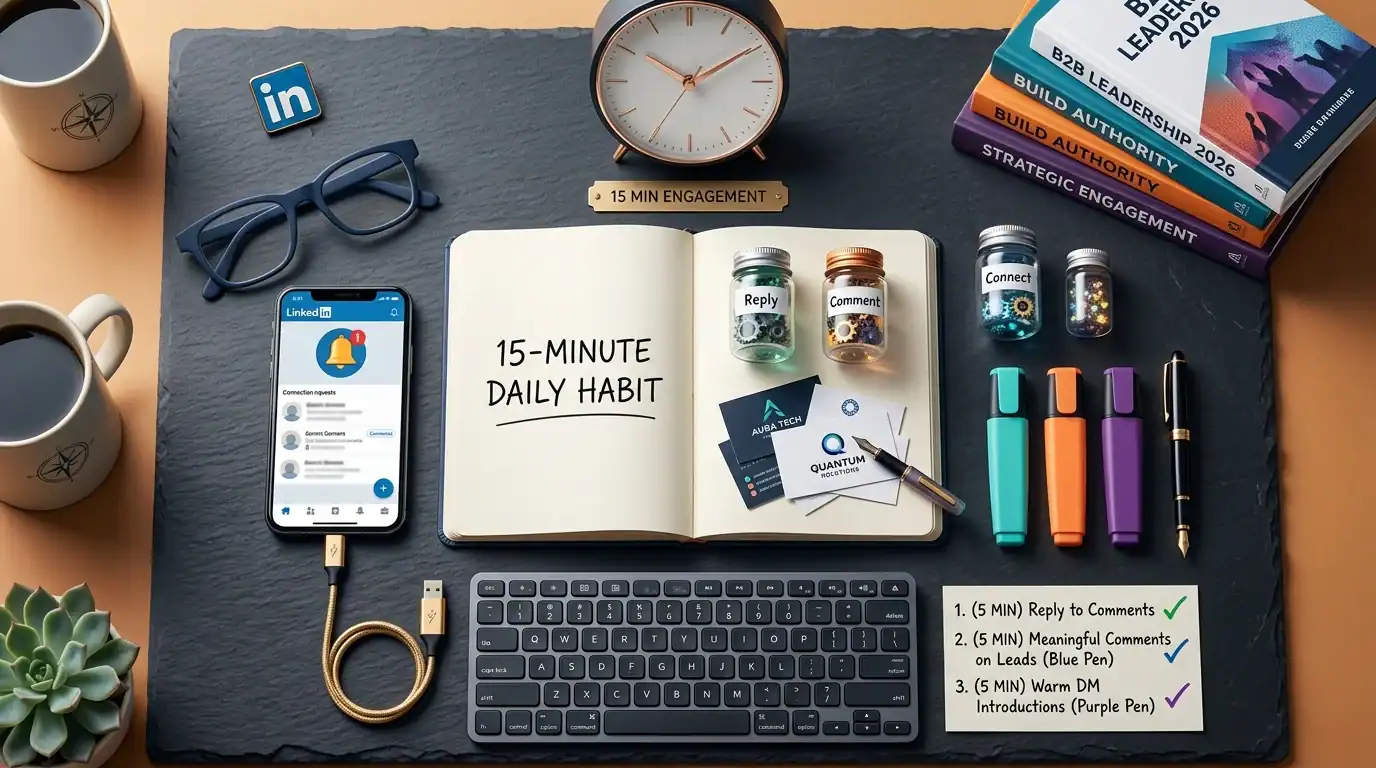
LinkedIn rewards engagement. The more comments your post gets in the first hour, the more people see it. But engagement is a two-way street — you can’t just broadcast and expect results.
Here’s the daily habit that builds a real LinkedIn presence:
- Respond to every comment on your posts within 1 hour. Thoughtful responses, not just “Thanks!” Ask a follow-up question. Continue the conversation. This signals to LinkedIn’s algorithm that your post is generating real discussion
- Comment on 5-10 posts from people in your target audience. Genuine, thoughtful comments. Not “Great post!” Add your perspective. Share a related experience. Ask a question. When your ideal clients see you consistently adding value in their feeds, they start paying attention to you
- Send 5-10 personalized connection requests per day to people in your target market. Not the default “I’d like to add you to my professional network.” Write a note: “Hi [name], I noticed we’re both in the Orlando business community. I share marketing tips and insights for small businesses — thought we might benefit from connecting.”
- Engage in 1-2 LinkedIn Groups relevant to your industry. Answer questions. Share your expertise. Don’t sell — help. The selling happens naturally when people see you consistently adding value
Total time: 15 minutes per day. That’s 75 minutes per week. Most of my clients who commit to this daily habit start seeing inbound messages and connection requests from qualified prospects within 30-60 days.
Lead Generation Without Being Salesy
Nobody likes cold DMs that start with “Hi, I noticed your profile and I think our services could help your business grow. Can we schedule a 15-minute call?” That’s the LinkedIn equivalent of a spam phone call. It gets ignored, reported, and blocked.
The best LinkedIn leads come from people who have been watching your content, trust your expertise, and reach out to you. That’s inbound marketing at its best — and it’s exactly what the content + engagement strategy above creates.
Build authority first. Share value consistently. Help people for free in comments and posts. When they eventually need what you sell, you’re the first person they think of. That’s not a sales technique — it’s a trust-building strategy that generates leads organically.
I’ve gotten some of my best clients this way. They followed my content for weeks or months. They saw me answer questions, share results, and offer helpful advice. When they needed marketing help, they didn’t search Google — they called me because they already knew and trusted my work.
Your LinkedIn Company Page
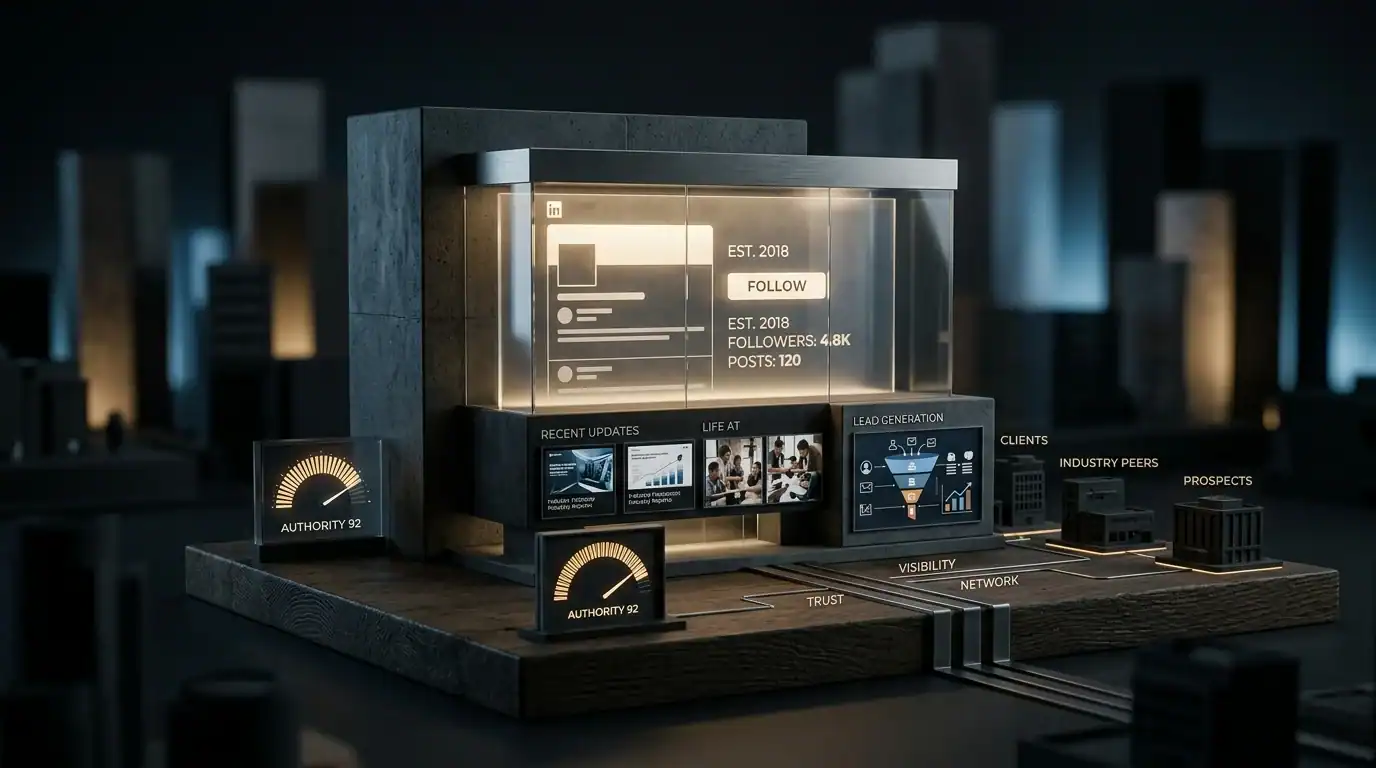
Your company page should be complete: logo, branded banner, keyword-rich description, website link, and regular posts (share your blog content, company updates, team highlights, and thought leadership pieces).
But remember: your personal profile drives 10x more engagement than a company page. The company page is for brand presence and credibility. Your personal profiles are for actual lead generation.
Frequently Asked Questions
How long until I see results from LinkedIn?
30-90 days of consistent posting and engagement. Your first few posts might get 5-10 views. After 30 days of daily activity, expect 200-1,000+ views per post. After 90 days, inbound messages and leads start coming in. The businesses that see the fastest results are the ones that post 3-5x per week and engage daily.
Should I use LinkedIn Ads?
LinkedIn Ads are expensive — $5-$15 per click, sometimes more. For most small businesses, organic content is the better investment. Use ads only if you have a high-ticket offer ($5,000+) that justifies the cost per lead. A $200/month SaaS product doesn’t make sense to advertise on LinkedIn. A $10,000 consulting engagement does.
How do I get more connections?
Send 10-20 personalized connection requests per day to people in your target market. Always add a note explaining why you want to connect. Don’t pitch in the connection request — that’s the fastest way to get ignored. Build the relationship first.
What time should I post on LinkedIn?
Tuesday through Thursday, 8-10 AM or 12-1 PM in your target audience’s timezone. These are the hours when professionals are most active on the platform. Avoid weekends (low activity) and Monday mornings (people are buried in email).
Is LinkedIn better than Facebook for B2B?
Absolutely. LinkedIn is built for professional relationships and business decisions. Facebook is for social connections. If your buyers are professionals making business purchasing decisions, LinkedIn is where they’re actively looking for partners and solutions. That said, if you serve consumers (restaurants, retail, personal services), Facebook is probably better.
Do I need LinkedIn Premium or Sales Navigator?
Not to start. Free LinkedIn is powerful enough for most businesses. Premium gives you InMail credits and extra profile views. Sales Navigator is useful for targeted lead lists but costs $80-$100/month. Start with free, master the fundamentals, and upgrade only when you’ve maxed out what free can do.
What if my industry isn’t “professional”?
If you sell to other businesses — any businesses — LinkedIn works. Contractors, cleaning companies, IT services, food suppliers, fleet management, industrial equipment. B2B isn’t just suits and boardrooms. If a business owner or manager is your buyer, they’re on LinkedIn.
Your LinkedIn Action Plan

- This week: Optimize your personal profile (headline, about, banner, featured section)
- Next week: Post your first 3 LinkedIn posts (a personal story, an industry insight, a how-to tip)
- Daily: Spend 15 minutes engaging — comments, connection requests, group participation
- Monthly: Review your analytics. Which posts got the most views and engagement? Do more of that
- Quarterly: Evaluate: Are you getting inbound messages? Connection requests from ideal clients? Leads? If not, adjust your content strategy
Next Steps
Want help building your LinkedIn presence and lead generation strategy? We offer social media marketing services that include LinkedIn content strategy, profile optimization, and engagement management.
Read our LinkedIn viral growth guide for advanced tactics. Check our social media ROI guide to measure what matters.
Let’s talk about your LinkedIn strategy or call (321) 300-4837. Learn more about Ocasio Consulting and how we help Orlando businesses grow.
If this raised more questions than it answered, we’ve got answers to common Social Media questions in our FAQ — covering everything from pricing and timelines to what results actually look like. You can also read verified client reviews from businesses we’ve helped across Orlando and Central Florida.