

Blogging for Business: Why Every Small Business Needs a Blog in 2026
If you think blogging is dead, I’ve got news for you — blogging for business is more valuable than ever. After 30 years in the digital marketing game, I’ve watched trends come and go, but one thing has stayed constant: businesses that blog win.
They win leads. They win trust. They win rankings. And they do it while their competitors sleep.
Let me show you why your small business needs a blog, how it actually works, and how to do it right.
From the auditor: Dennis Ocasio has delivered digital marketing for 200+ small businesses across Central Florida over 30+ years. Every recommendation here comes from tested, real-world client work — not theory.
Why Blogging Still Works (and Works Better Than Ever)
Here’s the thing about blogs: they’re not going out of style because they’re not a trend. They’re a business tool, like a phone line or a physical location.
When someone searches for a problem your business solves, Google has to decide what to show them. A blog post that answers their question perfectly? That’s gold. Google rewards it with rankings. Your potential customers find you. They read your knowledge. They trust you. Then they call.
Each blog post is a new entry point into your website. If you write one post about “how much does XYZ cost,” you own that search result. If you write five posts about different problems your customers face, you own five search results. Ten posts? You’re everywhere.
The math is simple: more blog posts = more entry points = more organic traffic = more leads.
The Three Real Ways Blogging Drives Business Results

1. You Own Organic Traffic (It’s Long-Term Money)
A Google Ads campaign works great — until you stop paying. You stop the ads, the clicks stop. But a blog post? A good blog post keeps working for months, sometimes years.
I had a client in Orlando (HVAC company) write a post about “signs your air conditioner is dying.” That post has brought them steady leads for three years now. Zero ongoing cost. Just ranked, positioned, and generating revenue.
That’s compounding value that paid ads can’t match.
2. You Build Real Authority and Trust
When you explain something better than your competitors, people notice. When you write honestly about what works (and what doesn’t), people respect that.
Google wants to show people content from sources it can trust. Your blog becomes proof that you know your stuff. Write about your industry the way a friend would explain it — clear, honest, helpful. That builds E-E-A-T (Experience, Expertise, Authoritativeness, Trustworthiness) that Google actually rewards.
3. Your Blog Supports Every Other Marketing Channel
Blogging isn’t isolated. It’s the hub. You share blog posts on social media. You link to them in emails. You use them in ads. You reference them when you talk to customers.
A single great blog post becomes:
- Social media content (5-10 posts from one article)
- Email newsletter material
- Talking points for sales calls
- Evidence of your expertise
- A page Google ranks and sends traffic to
That’s one piece of work doing five jobs.
What Should You Actually Blog About?
This is where most businesses mess up. They write about themselves. Nobody cares. Write about your customers instead.
Focus on Real Customer Questions
What do customers ask you? What problems do they call about? Blog about that. If three different customers have asked you the same question, 300 potential customers are asking Google the same thing.
Those are your blog topics. You’re not guessing. You already know people want answers.
Industry Topics and Trends
Write about what’s happening in your industry right now. Pricing changes. New regulations. Common mistakes people make. Best practices that actually work.
Local Content
You’re in East Orlando. That matters. Write about local business topics. “How to grow your business in Orlando.” “Why local businesses are thriving in Alafaya.” Local content connects with local customers and can seriously help with local SEO.
Case Studies and Real Results
Tell your story. How did you help a customer? What was their problem? What changed after you worked together?
People connect with results. A blog post about “how we increased online leads for a local service company by 40%” is proof. It’s persuasive. And it works.
How Often Should You Blog?
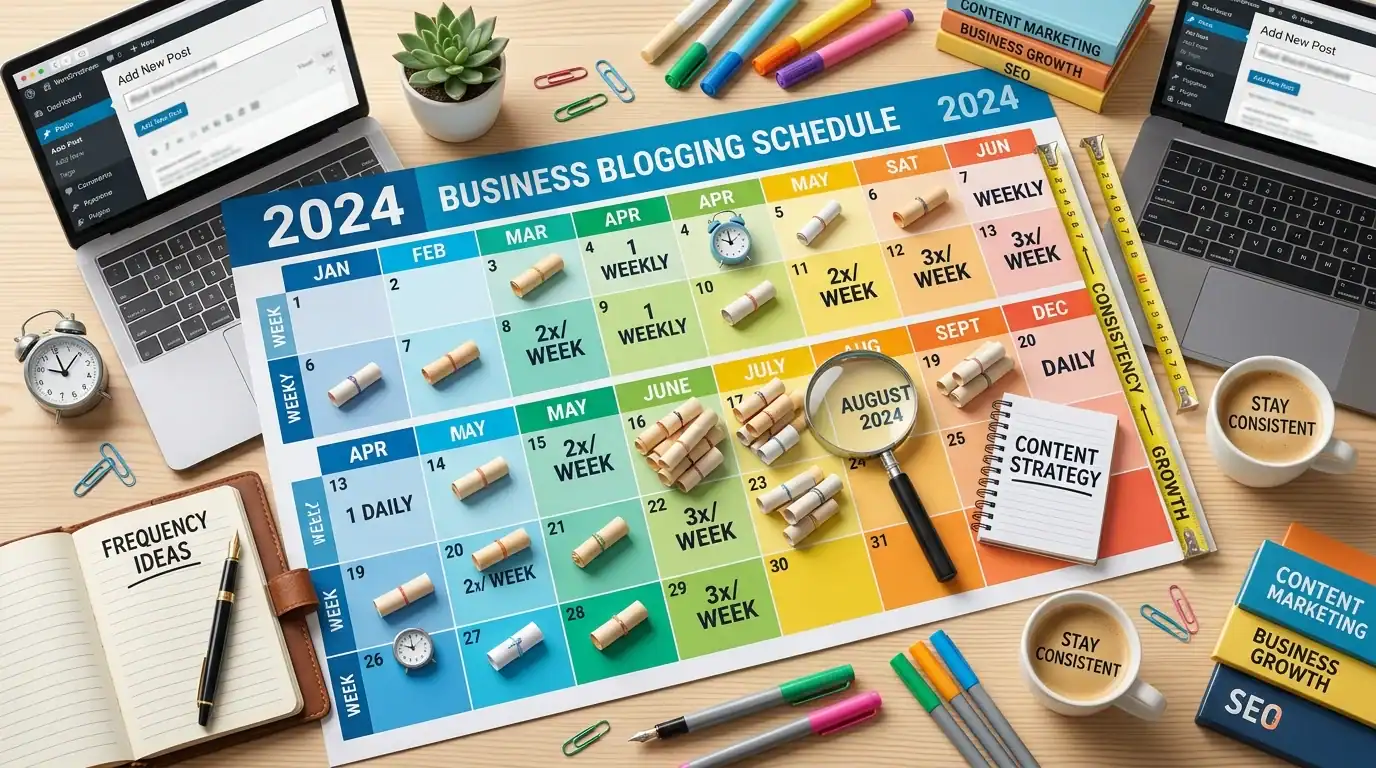
I recommend 2-4 posts per month minimum. Here’s why:
One post per month? You’ll see slow, slow results. Maybe nothing for 6 months. By then, most businesses give up.
Two to four posts per month? You’re consistent. You’re giving Google new content regularly. You’re hitting different keywords. In 6 months, you have 12-24 posts. Now you’re ranking for real searches. Traffic starts coming in.
Once per week? Even better. But start with 2-4 and be consistent. Consistency beats perfection every time.
Common Blogging Mistakes (And How to Avoid Them)
Mistake #1: Writing for Yourself, Not Your Audience
You know your industry inside out. That’s great. But your audience doesn’t. Don’t assume they know your jargon or your background.
Write like you’re explaining something to a friend. Use simple words. Short sentences. Get to the point. If you need to use a technical term, explain it first.
Mistake #2: No Keyword Strategy
Random blog topics won’t work. Pick topics because people are searching for them. Use a tool like Google Search Console or Ahrefs to find real searches in your industry.
Every post should target a primary keyword that people actually type into Google. Then secondary keywords. This isn’t complicated — it’s just purposeful.
Mistake #3: Posting Once and Disappearing
Consistency kills. If you write one great post and then nothing for three months, Google notices. Your audience notices. Your competitors who post regularly will pass you.
Put blogging on your calendar. It’s not optional. It’s marketing infrastructure.
Mistake #4: Ignoring Your Actual Readers
You’re blogging for real people, not search engines. Yes, optimize for Google. But first write something people actually want to read.
Short paragraphs. Subheadings. Lists. Real examples. A conversational tone. Make it scannable and easy to understand.
My Real Experience: How Blogging Changed Things

When I started Ocasio Consulting back in 2013, we did what everyone did: we hoped phone calls would come in from somewhere. They didn’t.
We started blogging about what we knew. Content marketing, SEO, Google Ads, web design. Not to sound fancy. To help people actually solve problems.
Slowly, Google started ranking our posts. People started finding us when they searched. They’d read our content, understand our approach, and then call us.
That strategy works. It’s worked for 30 years of my career, and it’s working for our clients right now.
One client, a local contractor, was invisible online. We helped them blog about common building questions and project types. Six months later, they’re getting leads from Google every single week.
Another client was competing against bigger companies. We built a blog strategy around questions their audience was asking. A year later, they’re ranking for 50+ keywords their competitors don’t touch. Their lead cost dropped 30%.
This isn’t magic. It’s just consistent, helpful writing combined with smart strategy.
Getting Started With Your Blog
You don’t need fancy tools. You don’t need to become a writer. You need:
- A list of real questions your customers ask
- A publishing platform (WordPress, HubSpot, etc.)
- A schedule (2-4 posts per month)
- A voice (be honest, helpful, conversational)
- Someone to maintain it
The last part is important: someone needs to own it. That could be you, a team member, or an agency. But it has to be someone’s job or it won’t happen.
The Next Step for Your Business

If you’re not blogging yet, you’re losing to competitors who are. Every day without a blog is a day someone else is owning search results in your market.
We help businesses build content marketing strategies that actually drive leads. That’s paired with SEO to make sure Google finds your posts.
Want to know how blogging could work for your business? Let’s talk. I’ll explain the real opportunity and what it would take to get started.
FAQ: Blogging for Business
How long does it take to see results from blogging?
Most businesses see their first real results in 3-6 months of consistent blogging. Some see traction earlier, some take longer. It depends on your industry, competition, and how well you target keywords. But patience pays off — one year of consistent blogging usually shows significant traffic growth.
Does blogging really help SEO?
Yes. Blog posts are one of the best SEO tools available. Each post gives you a new page to rank for keywords. More pages = more traffic opportunities. Plus, regular blog updates signal to Google that your site is active and relevant.
How long should each blog post be?
For SEO and reader value, aim for 1,500-2,500 words. That’s long enough to fully answer a question and hit your keywords naturally. Shorter posts (500-1,000 words) work for quick answers, but longer content typically performs better in search rankings.
Should we blog about our competitors?
No. Blog about your customers’ problems and questions, not your competitors. Your goal is to answer what your audience is searching for. Mention competitors only when it’s helpful context for readers — like comparing solutions to a problem.
What if we don’t have time to blog?
Then you need to hire someone who does. A freelance writer, a content agency, or a team member. Blogging works, but only if it’s consistent. If you can’t commit to 2-4 posts per month, you’ll waste time with nothing to show for it.
Do we need a blog if we use Google Ads?
They’re different tools for different purposes. Google Ads brings fast traffic while you pay. A blog builds long-term organic traffic. The smart strategy is using both: ads for immediate leads while you build your blog for future years of free traffic.
How do we measure blog success?
Track these: organic traffic (Google Analytics), rankings (Google Search Console), leads from blog traffic, and engagement (time on page, bounce rate). Don’t obsess over page views. Focus on whether blog traffic is actually turning into business.
What topics should a service business blog about?
Start with the questions your customers ask you most often. “How much does [your service] cost?” “How long does [your service] take?” “What should I look for when hiring a [your profession]?” “What’s the difference between [option A] and [option B]?” Every question a customer asks in person is a blog post that hundreds of potential customers are typing into Google right now.
How does blogging help with local SEO?
Every blog post is a new page that Google can index and rank for specific keywords. A post titled “How to Choose a Digital Marketing Agency in Orlando” targets people searching for exactly that phrase in your city. More blog posts targeting local keywords means more entry points for local customers to find your business. Over time, this builds your topical authority in your market — Google sees your site as the go-to resource for your services in your area. That’s how you dominate local search results. Check our local SEO services for more on this strategy.
Your Blogging Action Plan

You don’t need fancy tools. You don’t need to become a professional writer. You need:
- A list of 20 real questions your customers ask (these are your first 20 blog topics)
- A publishing platform (WordPress is the standard for business blogs)
- A schedule (2-4 posts per month, every month, no exceptions)
- A voice (be honest, helpful, and conversational — write like you’re explaining something to a smart friend)
- Someone to own it (you, a team member, or an agency — but someone has to be responsible or it won’t happen)
The last point is the most important. Blogging fails not because the strategy is wrong, but because nobody owns the execution. Make it someone’s job. Put it on the calendar. Treat it like a business appointment that can’t be canceled.
Next Steps
If you’re not blogging yet, you’re losing to competitors who are. Every day without a blog is a day someone else is owning the search results in your market.
We help businesses build content marketing strategies that actually drive leads. That’s paired with SEO to make sure Google finds your posts and ranks them.
Want to know how blogging could work for your business? Let’s talk or call (321) 300-4837. I’ll explain the real opportunity and what it would take to get started.
Read more: Content Marketing ROI | What Is Content Marketing
If this raised more questions than it answered, we’ve got answers to common Content Marketing questions in our FAQ — covering everything from pricing and timelines to what results actually look like. You can also read verified client reviews from businesses we’ve helped across Orlando and Central Florida.