
WordPress vs Custom Website: Which Is Right for Your Business in 2026?
One of the first decisions you’ll make when building a new website is whether to go with WordPress or a custom website. I’ve built both kinds for 30 years, and I’m going to give you the honest truth: there’s no one-size-fits-all answer.
What works for a local service business in Orlando isn’t the same as what works for a SaaS platform. Your budget, timeline, and technical needs all matter. Let’s break down exactly what you’re choosing between so you can make the right call for your business.
From the auditor: Dennis Ocasio has delivered digital marketing for 200+ small businesses across Central Florida over 30+ years. Every recommendation here comes from tested, real-world client work — not theory.
What Is WordPress?
WordPress is a content management system (CMS) that lets you manage your website without writing code. You pick a theme (a pre-designed template), add your content, install plugins for features you need, and you’re running a website. About 43% of all websites use WordPress. That tells you something about how popular and reliable it is.
When I say WordPress, I mean WordPress.org (self-hosted), not WordPress.com. For any business, always use WordPress.org. You get full control over your site, your plugins, your hosting, and your data.
What Is a Custom Website?
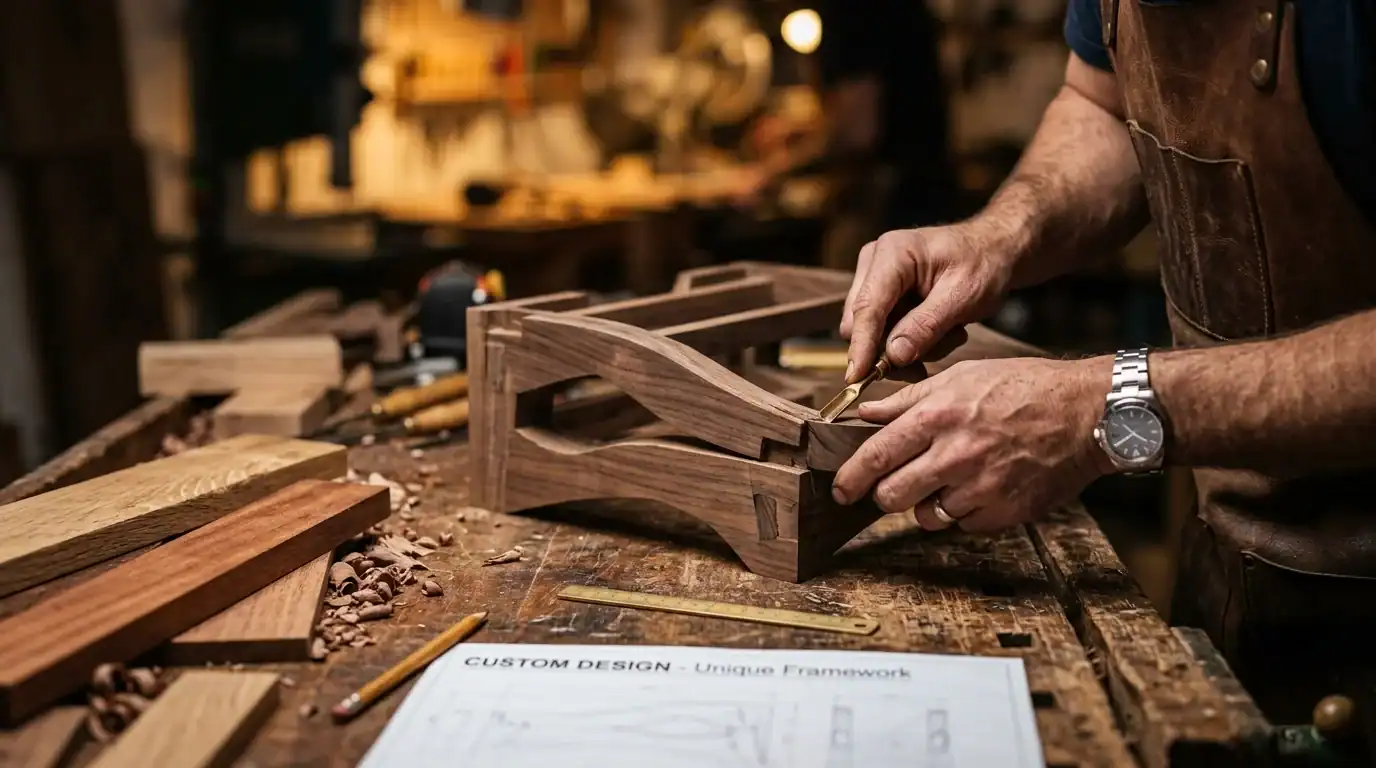
A custom website is built from scratch using code — usually HTML, CSS, JavaScript, and a backend language like PHP, Python, or Node.js. There’s no template. Every piece is tailored to your exact needs.
Think of WordPress as buying a house with standard floor plans. A custom site is building exactly the house you want, from the foundation up. More expensive, more time, but perfectly fitted to you.
WordPress Pros: Why It Works for Most Businesses
Cost. WordPress sites start around $2,000–$5,000 for a professional build. Custom sites start at $10,000 and go up from there. For most small businesses, that difference is significant.
Speed to launch. You get a website live in 4-8 weeks, not 3-6 months. If you’re waiting for a competitive advantage or need leads fast, WordPress delivers sooner.
Huge plugin ecosystem. Need a contact form? There’s a plugin. Gallery? Plugin. E-commerce? WooCommerce. Booking system? Plugin. Email marketing integration? Done. This is WordPress’s biggest strength — thousands of pre-built features you just install.
You can update it yourself. Once your site is built, you don’t need a developer for basic updates. You can change copy, add images, create new pages, publish blog posts. That’s freedom and money saved long-term.
SEO-friendly by nature. WordPress was built for content. It handles clean code, mobile responsiveness, XML sitemaps, and structured URLs automatically. If you’re trying to rank in Google, WordPress doesn’t hold you back. With a plugin like SEOPress, you get full control over titles, meta descriptions, schema, and more.
Massive community support. Because WordPress powers 43% of the web, there’s a massive community of developers, designers, and educators. Every problem you’ll encounter has already been solved and documented. You’re never stuck.
WordPress Cons: The Real Limitations

Plugin bloat. Each plugin you install adds code to your site. Too many plugins slow everything down. I’ve seen sites with 40+ plugins that take 8 seconds to load. Every plugin is also a potential security risk if it’s not maintained.
Security requires attention. WordPress is a target because it’s so popular. Hackers know where to look. You need regular updates, a good security plugin (like Wordfence), strong passwords, and daily backups. That’s extra work or extra cost if you hire someone.
Speed issues if not optimized. Out of the box, WordPress sites are slower than custom sites. You’re running a CMS on every page load. With good hosting, caching (WP Rocket), and image optimization, you can get load times under 3 seconds. But it takes effort. Read our website speed optimization guide for details.
Generic if you use templates. If you buy a pre-made theme off the shelf, your site might look like 5,000 other businesses. Your competitors could have the exact same design. That hurts your brand differentiation.
Can’t do everything. Complex features — real-time collaboration, custom algorithms, advanced API integrations, multi-step workflows — are hard or impossible in WordPress. You end up building workarounds instead of real features.
Custom Website Pros: When Uniqueness and Performance Matter
Lightning-fast performance. There’s no CMS overhead. Custom sites load faster because every line of code is purposeful. No wasted resources. For businesses where milliseconds matter (e-commerce, SaaS, high-traffic sites), this is a real advantage.
Completely unique design. Your site looks like you, not like 50 competitors using the same theme. Custom design means your brand stands out visually and functionally.
No bloat. Only the features you need exist on your site. No unused plugins. No extra CSS from themes you’re not using. Cleaner code means fewer security holes and faster load times.
Tailored user experience. Every interaction — your checkout process, your content flow, your customer journey — is designed specifically for your business goals and your customers’ needs.
Scales beyond WordPress limits. Building a SaaS platform? A complex web app? An enterprise system with 100,000 users? Custom is the only real option. WordPress will buckle under that load.
Custom Website Cons: Why It’s Not for Everyone
Expensive. You’re paying developers to build everything from scratch. Most projects run $15,000–$50,000+. Enterprise-level projects cost six figures. For a small business that needs a brochure site with 10 pages, that’s overkill.
Long development timeline. Custom sites take 3-6 months. Some complex projects take a year. If you need to launch in 4 weeks, this isn’t your answer.
You can’t update it yourself. Most business owners can’t code. Want to change a headline? Add a new page? Update your hours? You need to call a developer. That’s time and money every single time.
Harder to find and retain developers. Good custom developers are expensive and booked out. WordPress developers are everywhere because everyone uses WordPress. If your custom developer leaves, finding someone who understands their code is painful.
Ongoing maintenance cost. Custom code needs updates, security patches, server maintenance, and occasional rewrites as technology evolves. These costs add up year over year.
Cost Comparison: First Year Breakdown
| Cost Factor | WordPress | Custom |
|---|---|---|
| Initial Build | $2,500–$8,000 | $15,000–$50,000+ |
| Hosting | $100–$500/year | $200–$1,000/year |
| Security & Backups | $200–$500/year | Included in dev costs |
| Maintenance & Updates | $0–$200/month | $500–$2,000/month |
| Content Updates (DIY) | Free (you do it) | $50–$150/change |
| Year 1 Total | $3,000–$11,000 | $21,000–$74,000+ |
That gap is real. For most small and medium-sized businesses, WordPress wins on price — sometimes by a factor of 5 to 10x.
When WordPress Wins (This Is 90% of Small Businesses)

You should pick WordPress if you need:
- A website fast (within 4–8 weeks)
- Something affordable (under $10,000 initial investment)
- The ability to update your own content without calling a developer
- A blog as part of your content marketing and SEO strategy
- Good SEO without extra engineering work
- Standard features like contact forms, galleries, testimonials, e-commerce
- Easy scaling as your business grows
Most service businesses, local shops, consultants, restaurants, contractors, and small agencies should go WordPress. It’s the proven, affordable, and practical choice. Here at Ocasio Consulting, we build WordPress sites for local Orlando businesses because it’s the smart play for them. Check our web design services to see our approach.
When Custom Wins
Go custom if you need:
- A complex web application or SaaS platform
- Real-time features (live collaboration, instant notifications, streaming)
- Custom algorithms or proprietary business logic
- Extreme performance (millisecond-level speed matters for conversions)
- Complete brand uniqueness with no template constraints
- Enterprise-scale security and compliance requirements
- Integration with complex systems that don’t play well with WordPress
If you’re building a fintech app, a project management tool, a healthcare portal, or a platform that needs to scale to millions of users — custom is your only real option. WordPress will break under that kind of load and complexity.
My Honest Recommendation After 30 Years

I’ve built both kinds of sites throughout my career. Here’s what I tell every client who asks:
Start with WordPress. Get your business online fast. Generate leads. Start ranking in Google. Prove your concept. Learn what your customers actually need from your website based on real data, not guesses.
Then, if your business outgrows WordPress in 3 or 5 years, you migrate to custom. By that point, you have revenue to fund the custom build, and you know exactly what features you need because you’ve been running a real business on WordPress for years.
The businesses that fail aren’t the ones running WordPress. They’re the ones that spent $50,000 on a custom site they didn’t need, couldn’t maintain, and couldn’t afford to update. Don’t over-engineer your first website. Get something up, get customers, and iterate.
WordPress is good enough for 90% of businesses. Don’t let anyone tell you different.
Real Orlando Business Examples
Local plumbing company. We built them a WordPress site for $3,500. They update their own testimonials and service pages. Their Google rankings improved in 6 months. Cost per lead dropped by 30%. A custom site would have been overkill and 5x the cost.
Boutique coaching practice. WordPress site with a client portal built using a membership plugin. Total investment: $5,000. She sells coaching packages through it now and manages her own content. No developer needed for day-to-day operations.
Tech startup. Started on WordPress for their landing page and blog. As they grew and needed a custom dashboard for their SaaS product, we built a custom app alongside WordPress. The blog still runs on WordPress for SEO. Best of both worlds.
Frequently Asked Questions
Is WordPress secure enough for a business?
Yes. WordPress itself is secure. The vulnerabilities come from outdated plugins, weak passwords, and cheap hosting. Use a security plugin like Wordfence, keep everything updated, back up daily, and use a managed WordPress host. Most security issues are preventable with basic maintenance.
Can I switch from WordPress to custom later?
Yes. Your content migrates. Your URLs can stay the same with proper redirects. You rebuild the infrastructure while keeping everything your audience sees. It costs money, but it’s a well-traveled path. Many successful companies started on WordPress and migrated as they grew.
Will WordPress hurt my SEO?
No. WordPress ranks as well as custom sites when properly optimized. With SEOPress or a similar plugin, you get full control over title tags, meta descriptions, schema markup, sitemaps, and more. Some of the highest-ranking sites on the internet run WordPress.
How fast is a WordPress site compared to custom?
With good hosting (managed WordPress like WP Engine or Cloudways) and proper optimization (caching, image compression, minimal plugins), WordPress sites load in 2-3 seconds. Custom sites might load in 0.8-1.5 seconds. The difference matters less than you think for most businesses — Google cares more about Core Web Vitals thresholds than raw speed numbers.
Can WordPress handle e-commerce?
Yes. WooCommerce powers millions of online stores. For most small to medium e-commerce operations (under 10,000 products), WooCommerce handles it fine. If you’re running a massive catalog with complex inventory, real-time fulfillment, and high traffic, you might need a custom solution or a dedicated e-commerce platform like Shopify Plus.
What about WordPress.com vs WordPress.org?
WordPress.com is hosted by Automattic and has limitations on plugins, themes, and customization. WordPress.org is self-hosted — you control everything. For any business, always use WordPress.org. Period. WordPress.com is for personal blogs, not businesses.
How often does WordPress need maintenance?
Monthly is the minimum. Update WordPress core, update plugins, update your theme, check your backups, review security logs. Set automatic updates for minor releases and check manually for major ones. If you don’t want to do this yourself, hire someone for $100-$200/month. Our website maintenance services cover this.
Ready to Build Your Website?
If you’re ready to build a website and want to talk through whether WordPress or custom is right for your specific business, call me at (321) 300-4837. I’ll be straight with you about what makes sense for your situation, your budget, and your goals.
For more on this topic, check out our web design services and our post on WordPress for small businesses. Need a ballpark for what your site would cost? Read our article on website costs in Orlando. And our pricing page is completely transparent.
Ready to move forward? Let’s talk.
If this raised more questions than it answered, we’ve got answers to common Web Design questions in our FAQ — covering everything from pricing and timelines to what results actually look like. You can also read verified client reviews from businesses we’ve helped across Orlando and Central Florida.