
Landing Pages for PPC: How to Design Pages That Convert Clicks Into Customers
You’re paying good money for every Google Ads click. If those clicks land on a page that doesn’t convert, you’re burning cash. Landing pages for PPC are the single biggest factor in whether your ad spend makes you money or wastes it. I’m Google Ads Certified and I’ve built hundreds of landing pages for PPC campaigns over 30 years. The difference between a good landing page and a bad one? It’s not subtle. It’s the difference between a 2% conversion rate and a 10% conversion rate — which means 5x more leads from the same ad spend.
Let me show you exactly how to design landing pages that turn paid clicks into paying customers.
From the auditor: Dennis Ocasio has delivered digital marketing for 200+ small businesses across Central Florida over 30+ years. Every recommendation here comes from tested, real-world client work — not theory.
Why Your Homepage Is Not a Landing Page
This is the most common PPC mistake I see, and I wrote about it in our Google Ads mistakes guide. Your homepage talks about everything — all your services, your company history, your team, your blog. When someone clicks an ad for “emergency plumbing Orlando,” they want one thing: emergency plumbing information and a way to call you immediately.
Sending them to your homepage forces them to hunt for what they need. Most won’t bother. They’ll hit the back button and click your competitor’s ad instead. You paid $8-$15 for that click and got nothing.
A dedicated landing page solves this. One page. One offer. One action. No distractions.
The Anatomy of a High-Converting PPC Landing Page
1. Headline That Matches the Ad
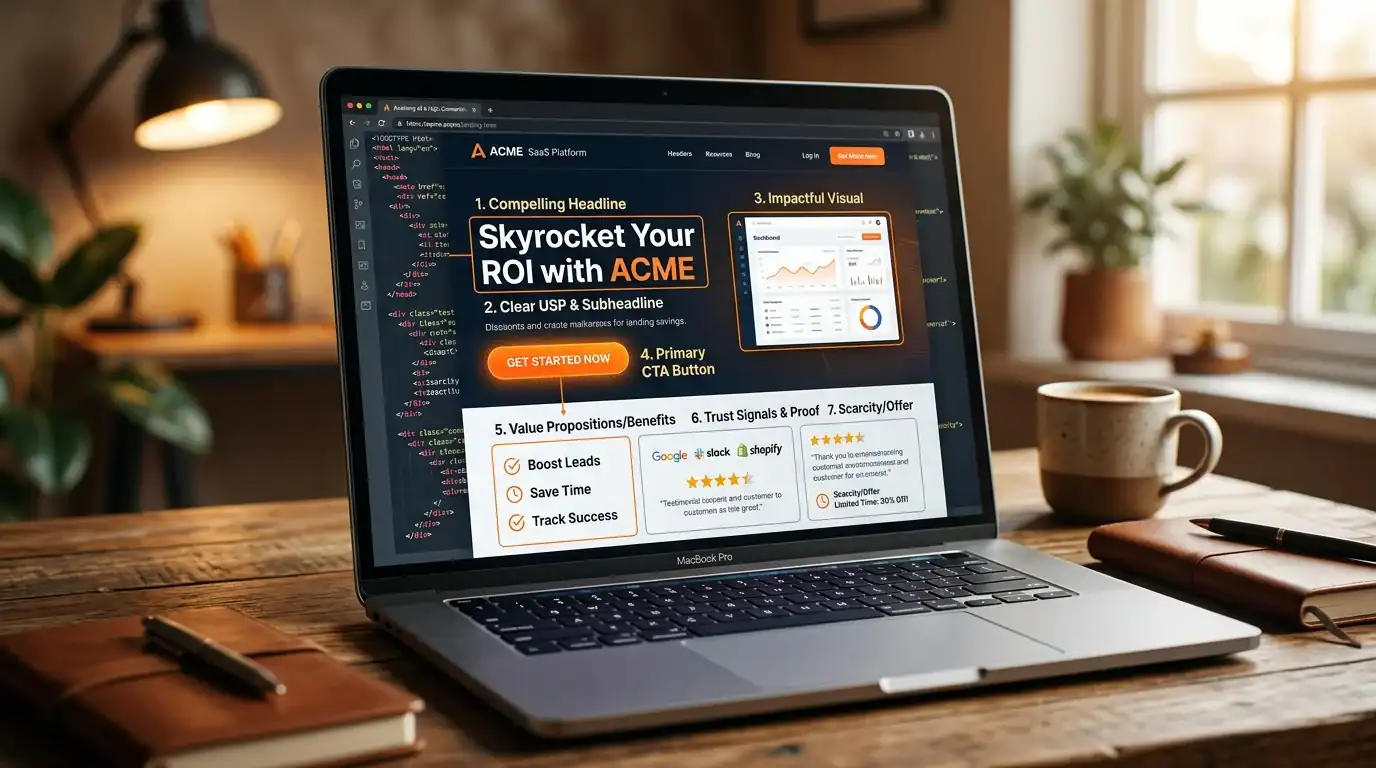
If your ad says “Emergency Plumbing — Available 24/7 — Call Now,” your landing page headline should say “Emergency Plumbing — Available 24/7.” This is called message match, and it’s the #1 factor in landing page conversion. When visitors see the exact same promise they clicked on, they know they’re in the right place. When they see something different, they bounce.
2. Subheadline That Adds Value
Your subheadline expands on the headline with a specific benefit. “Licensed Orlando plumbers at your door in 60 minutes or less. No overtime charges.” This answers the next question in the visitor’s mind: “Why should I choose you?”
3. Hero Section With Clear CTA
Above the fold (visible without scrolling), you need: your headline, a brief value statement (1-2 sentences), your phone number (large, clickable on mobile), and a contact form or “Call Now” button. That’s it. No navigation menu. No sidebar. No links to other pages. Nothing that takes the visitor away from the one action you want them to take.
4. Social Proof Near the CTA
Put your Google rating, review count, and 2-3 short testimonials near your call-to-action button. “4.9 stars from 127 reviews” next to “Call Now” is more persuasive than any copywriting trick. People trust other people more than they trust your marketing.
5. Benefits, Not Features
Don’t list what you do. List what the customer gets. Not “We use state-of-the-art equipment” but “Your problem is fixed the first time, guaranteed.” Not “24/7 availability” but “Call at 2 AM and we answer.” Speak to their pain, not your capabilities.
6. Trust Signals
Licensed and insured badges. BBB logo. Industry certifications. Google Partner badge. Payment method icons. “Serving Orlando since 2013.” These small elements add up to a big trust signal that makes people comfortable enough to pick up the phone.
7. Minimal Form Fields
For service businesses: name, phone number, brief description of the issue. Three fields. Maybe four if you need their zip code. Every additional field you add reduces form completion by 10-15%. I’ve seen businesses with 10-field forms wondering why nobody fills them out.
8. Mobile-First Design
60%+ of PPC clicks come from mobile devices. If your landing page doesn’t work perfectly on a phone — large tap targets, click-to-call button, easy-to-fill form, fast load time — you’re losing more than half your paid traffic. Test every landing page on your own phone before launching ads.
Landing Page Speed: Every Second Costs You Money
Google research shows that as page load time goes from 1 to 3 seconds, bounce rate increases by 32%. From 1 to 5 seconds? Bounce rate increases by 90%. If your landing page takes 5 seconds to load, 9 out of 10 visitors leave before they see anything.
For PPC landing pages, target under 3 seconds on mobile. Ideally under 2 seconds. Compress images, use a CDN, minimize code, and use fast hosting. Check our website speed optimization guide for the technical details.
Speed is even more critical for PPC than organic traffic because you’re paying for every visitor. A slow landing page doesn’t just lose visitors — it wastes ad spend.
One Landing Page Per Service (or Ad Group)
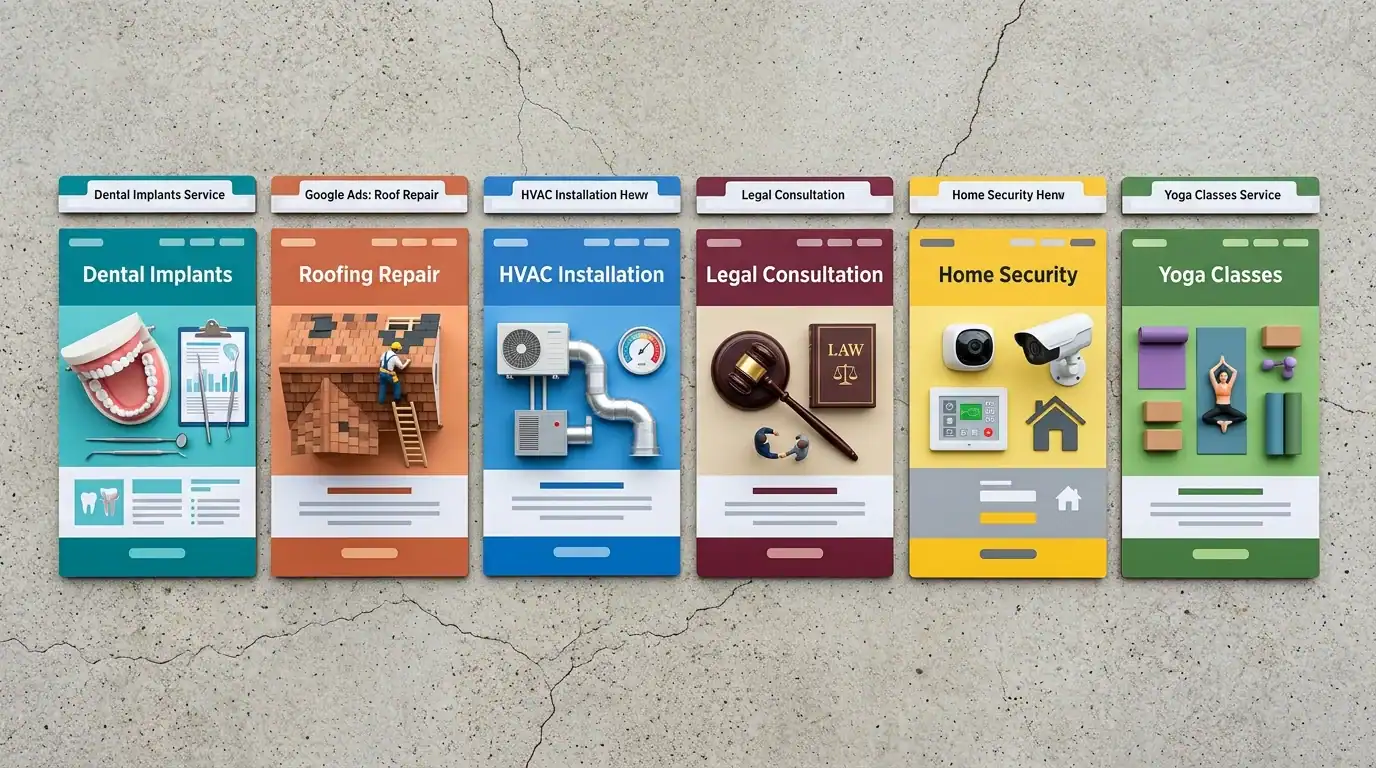
Don’t build one generic landing page for all your ads. Build specific pages for specific searches:
- “Emergency plumbing Orlando” → landing page about emergency plumbing with 24/7 messaging
- “Kitchen remodel Orlando” → landing page about kitchen remodeling with portfolio photos
- “Drain cleaning near me” → landing page about drain cleaning with pricing and availability
Each page speaks directly to what the person searched for. The more specific the match between search → ad → landing page, the higher your conversion rate and the lower your cost per lead.
This also improves your Google Ads Quality Score, which means you pay less per click. Google rewards advertisers whose landing pages closely match the search intent.
What to Remove From PPC Landing Pages
A landing page is as much about what you remove as what you add. Remove anything that distracts from the conversion action:
- Navigation menu: Remove it. You don’t want visitors clicking to your blog or about page. You want them to call or fill out the form
- Footer links: Minimize. Maybe keep privacy policy for compliance, but remove everything else
- Sidebar: Remove it entirely. One column. One focus
- Multiple CTAs: One primary action. “Call Now” or “Get a Quote.” Not both plus “Subscribe to our newsletter” and “Follow us on Instagram”
- Outbound links: Don’t link to external sites. Every link is an exit ramp away from your conversion
- Long paragraphs: Keep copy scannable. Short sentences. Bullet points. Bold key phrases. People on landing pages scan — they don’t read essays
A/B Testing Your Landing Pages
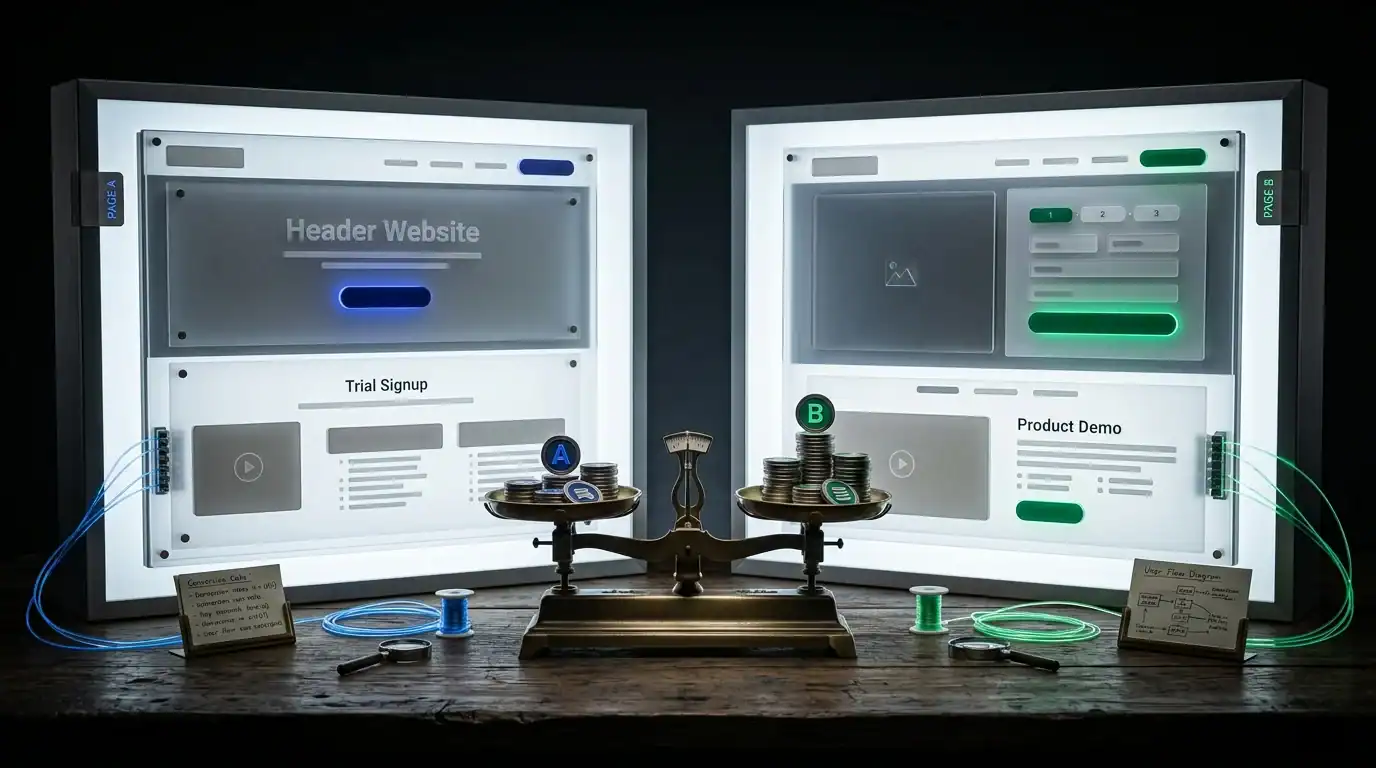
The best landing pages are built through testing, not guessing. A/B testing means creating two versions of a page, sending half your traffic to each, and measuring which converts better.
What to test (one element at a time):
- Headlines: Test different value propositions. “24/7 Emergency Service” vs “60-Minute Response Time”
- CTA button text: “Call Now” vs “Get a Free Quote” vs “Schedule Service”
- CTA button color: Green vs orange vs red (yes, button color matters)
- Form length: 3 fields vs 5 fields
- Social proof placement: Above the fold vs below the fold
- Hero image: Photo of your team vs photo of your work vs no image
Run each test for at least 2 weeks or 200 conversions (whichever comes first). Small improvements compound — a 10% improvement in conversion rate means 10% more leads from the same budget. Do that 5 times and you’ve doubled your results.
Real Numbers: What Good Landing Pages Achieve
Here’s what I’ve seen across client campaigns in Orlando:
- Homepage as landing page: 1-3% conversion rate (most common, worst performer)
- Generic landing page: 3-5% conversion rate (one page for all ads)
- Service-specific landing page: 5-8% conversion rate (matched to ad group)
- Optimized and tested landing page: 8-15% conversion rate (after A/B testing)
The difference between 2% and 10% conversion rate on $2,000/month ad spend:
- At 2%: 250 clicks x 2% = 5 leads/month. Cost per lead: $400
- At 10%: 250 clicks x 10% = 25 leads/month. Cost per lead: $80
Same ad spend. Same clicks. 5x more leads. That’s the power of a good landing page.
Landing Page Tools and Platforms

You don’t need to code landing pages from scratch. Here are the tools I recommend:
- WordPress + Elementor: If your site is already on WordPress, Elementor lets you build custom landing pages with drag-and-drop. No coding required. This is what we use for most clients
- Unbounce: Dedicated landing page builder with built-in A/B testing. $99+/month. Best for businesses running lots of PPC campaigns
- Leadpages: Simpler and cheaper than Unbounce. Good templates. $49+/month
- Instapage: Enterprise-level landing page platform. Advanced personalization features. $199+/month
For most small businesses in Orlando, WordPress + Elementor is the sweet spot. You keep everything on your own domain, you control the design, and there’s no monthly platform fee.
Connecting Landing Pages to Your CRM
Every form submission from your landing page should flow into your CRM automatically. If you’re using HubSpot or another CRM, set up the integration so leads get:
- Automatically added to your contact database
- Tagged with the campaign source (which ad, which keyword)
- Assigned to the right salesperson
- Entered into a follow-up email sequence
This ensures no lead falls through the cracks. The businesses that close the most PPC leads are the ones that follow up fastest — and automation makes that possible at scale.
Frequently Asked Questions

How many landing pages do I need?
At minimum, one per major service or ad group. If you’re running ads for 5 different services, you need 5 landing pages. More specific = higher conversion rates. Some businesses have 20-50 landing pages for different keywords and geographic targets.
How much does a landing page cost to build?
A professional landing page costs $500-$2,000 depending on complexity, copywriting, and design. Given that a good landing page can reduce your cost per lead by 50-80%, the ROI is usually immediate.
Should my landing page have a form or just a phone number?
Both. Some people prefer to call. Some prefer to fill out a form. Give them both options. On mobile, make the phone number a click-to-call button. Put the form where it’s visible without excessive scrolling.
How do I track landing page conversions?
Set up Google Ads conversion tracking for form submissions and phone calls. Use unique phone numbers for each landing page (Google forwarding numbers or CallRail). Track everything so you know which pages convert and which don’t.
Does landing page design affect Quality Score?
Yes. Landing page experience is one of the three components of Quality Score. A relevant, fast, mobile-friendly landing page improves your Quality Score, which lowers your cost per click. A slow, irrelevant, or poorly designed landing page hurts your Quality Score and increases costs.
How long should a PPC landing page be?
For service businesses, shorter is usually better — enough to communicate value, build trust, and present the CTA. 500-1,000 words typically. For high-consideration purchases (expensive services, B2B), longer pages with more detail can work. Test and measure.
Next Steps
Want landing pages built for your PPC campaigns? We design conversion-focused websites and landing pages specifically for paid advertising. Combined with our Google Ads management, we handle the full pipeline from click to customer.
Schedule a free consultation or call (321) 300-4837.
Read more: Google Ads Cost in Orlando | Conversion Rate Optimization | PPC vs SEO
If this raised more questions than it answered, we’ve got answers to common Google Ads questions in our FAQ — covering everything from pricing and timelines to what results actually look like. You can also read verified client reviews from businesses we’ve helped across Orlando and Central Florida.