
Email Marketing for Small Business: How to Build Your List and Convert Subscribers Into Customers
Email marketing for small business remains the highest-ROI marketing channel available. For every $1 spent on email marketing, the average return is $36-$42. No other channel comes close — not social media, not paid ads, not even SEO. I’ve been helping Orlando businesses build email programs for years, and the ones that commit to it see consistent, predictable revenue that doesn’t depend on algorithms, ad budgets, or platform changes.
The problem? Most small businesses either don’t have an email list, have one they never use, or send occasional blasts that nobody opens. Let me show you how to build an email program that actually generates revenue.
From the auditor: Dennis Ocasio has delivered digital marketing for 200+ small businesses across Central Florida over 30+ years. Every recommendation here comes from tested, real-world client work — not theory.
Why Email Marketing Beats Every Other Channel
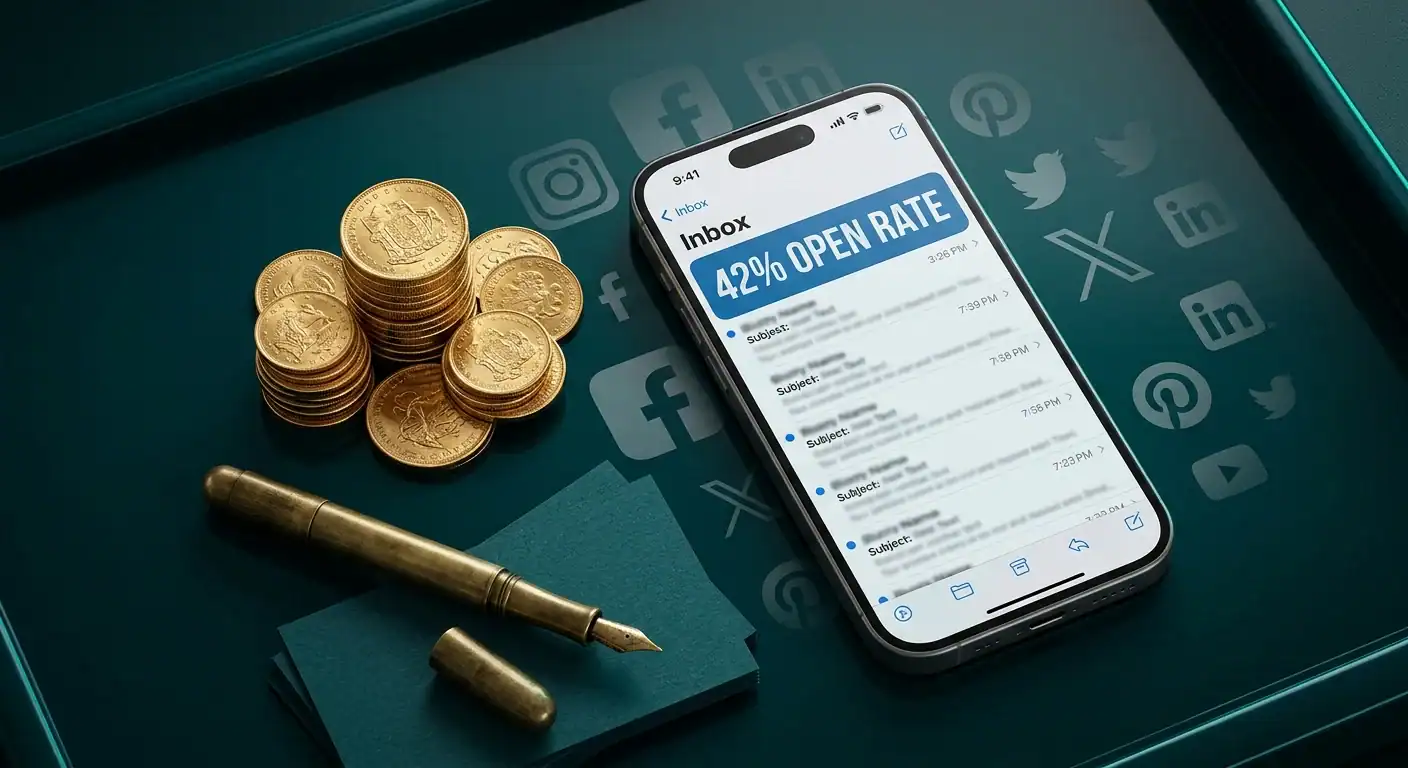
You own the list. Your Instagram followers? Instagram owns those. Your Facebook fans? Facebook controls your reach. Your Google rankings? One algorithm update and they’re gone. But your email list? That’s yours. No platform can take it away. No algorithm change can hide your messages. You control the relationship directly.
Highest conversion rates. Email converts at 2-5% for most businesses — 2-3x higher than social media and comparable to paid search. People who give you their email address have explicitly opted in to hear from you. That’s a warm audience that’s already interested.
Low cost. Email marketing platforms cost $0-$100/month for most small businesses. Compare that to $500-$5,000/month for Google Ads or $1,000-$3,000/month for SEO. The infrastructure is cheap. The ROI is massive.
Automation works while you sleep. Set up email sequences once and they run forever. A welcome sequence for new subscribers. A nurture sequence for leads who aren’t ready to buy. A post-purchase sequence for new customers. These run 24/7 without you touching them. That’s what our AI marketing automation services are built around.
Curious what these tools actually cost? Our marketing automation cost guide for small businesses breaks down every major platform and what you’ll realistically pay in 2026.
Building Your Email List From Scratch

You can’t do email marketing without an email list. Here’s how to build one even if you’re starting at zero:
Lead Magnets: Give Value to Get Emails
A lead magnet is something valuable you give away for free in exchange for an email address. The key word is valuable — it has to solve a real problem or save the person real time.
Lead magnet ideas by business type:
- Service businesses: Free estimate calculator, maintenance checklist, “questions to ask before hiring a [your profession]” guide
- Professional services: Free consultation booking, industry report, compliance checklist, tax preparation guide
- E-commerce: 10% discount code, free shipping on first order, style guide or buying guide
- B2B: Whitepaper, industry benchmark report, ROI calculator, free audit
- Digital marketing (like us): Free website audit, SEO checklist, social media content calendar template
Put your lead magnet on your homepage, your blog sidebar, in pop-ups (tasteful ones), and on dedicated landing pages. Every visitor should see an opportunity to join your email list.
Opt-In Forms That Convert
Your sign-up form needs three things: a clear value proposition (“Get our free SEO checklist”), minimal fields (email address only, or email + first name at most), and a specific CTA button (“Send Me the Checklist” is better than “Subscribe”).
Where to place opt-in forms:
- Homepage hero section or sidebar
- Blog post footer (after they’ve read valuable content and trust you)
- Exit-intent popup (appears when they’re about to leave)
- Dedicated landing page for each lead magnet
- Social media bio links
The 5 Email Sequences Every Small Business Needs
1. Welcome Sequence (3-5 emails over 2 weeks)
This is the most important sequence. Someone just gave you their email — they’re interested right now. Don’t waste this moment.
- Email 1 (immediately): Deliver the lead magnet. Thank them. Tell them what to expect from your emails
- Email 2 (day 2): Introduce yourself and your story. Why you started your business. What you believe in
- Email 3 (day 4): Share your best piece of content — a top blog post, a case study, a useful tip
- Email 4 (day 7): Social proof — testimonials, reviews, client results
- Email 5 (day 10): Soft CTA — “If you need help with [your service], here’s how to get started”
2. Nurture Sequence (ongoing, 1-2 emails per week)
After the welcome sequence, move subscribers into your regular nurture flow. Alternate between educational content (tips, guides, industry news) and promotional content (services, case studies, offers). The 80/20 rule: 80% value, 20% promotion.
3. Re-engagement Sequence (3 emails)
For subscribers who haven’t opened your emails in 60-90 days. “We haven’t heard from you in a while — still interested?” Give them a compelling reason to re-engage or a clean way to unsubscribe. A smaller, engaged list is better than a large, dead one.
4. Post-Purchase/Post-Service Sequence (3-4 emails)
After someone becomes a customer: thank them, ask how the experience was, request a review (link directly to your Google or Facebook review page), and offer a referral incentive. This turns one customer into multiple through word-of-mouth.
5. Abandoned Inquiry Sequence (2-3 emails)
If someone fills out a contact form or starts a quote process but doesn’t follow through, send automated follow-ups. “You started requesting a quote — can we help you finish?” Recovery emails bring back 5-15% of abandoned inquiries.
Email Marketing Platforms for Small Business

- Mailchimp: Best for beginners. Free up to 500 contacts. Easy to use. Limited automation on free plan
- HubSpot: Best for businesses that want CRM + email in one platform. Free tier is generous. We’re a HubSpot Partner and recommend this for most clients
- ConvertKit: Best for creators and content-driven businesses. Great automation and tagging
- ActiveCampaign: Best for advanced automation. Powerful but steeper learning curve
- Constant Contact: Good for local businesses. Simple. Includes event marketing features
For most Orlando small businesses, HubSpot or Mailchimp is the right starting point. If you need advanced automation, ActiveCampaign is worth the investment.
Writing Emails That Get Opened and Clicked

Subject Lines
Your subject line determines whether the email gets opened or ignored. Keep it under 50 characters. Create curiosity or promise specific value. Personalize when possible (use their first name). Avoid spam trigger words (FREE!!! URGENT!!! ACT NOW!!!). Test different styles and track open rates.
Good subject line patterns:
- “The one thing I’d fix on your website first”
- “[Name], your competitors are doing this”
- “I made this mistake so you don’t have to”
- “3 things I’d change about your marketing today”
- “Quick question about your business”
Email Body
Write like you’re talking to one person, not broadcasting to a list. Use their name. Short paragraphs (2-3 sentences). One clear CTA per email. Mobile-friendly format (most people read email on their phone). Include a P.S. — it’s the second most-read part of any email after the subject line.
Measuring Email Marketing Success

- Open rate: 20-25% is average. Above 30% is excellent. Below 15% means your subject lines need work or your list quality is poor
- Click-through rate: 2-5% is average. Measures how many people click a link in your email
- Conversion rate: How many email clicks turn into leads or sales. This is the metric that matters most
- Unsubscribe rate: Below 0.5% per email is healthy. Above 1% means your content isn’t matching subscriber expectations
- List growth rate: Track new subscribers per month. Your list should be growing consistently
Frequently Asked Questions
How often should I email my list?
1-2 times per week is the sweet spot for most small businesses. Less than once a month and people forget who you are. More than 3 times a week and you risk fatigue. Consistency matters more than frequency — pick a schedule and stick to it.
How do I avoid the spam folder?
Use a reputable email platform (not your personal Gmail). Authenticate your domain (SPF, DKIM, DMARC). Don’t use spam trigger words in subject lines. Always include an unsubscribe link. Clean your list regularly (remove bounced addresses). Build your list organically — never buy email lists.
Is email marketing still effective in 2026?
More than ever. 4 billion people use email daily. Unlike social media, email isn’t subject to algorithm changes that kill your reach overnight. The $36-$42 ROI per dollar spent has been consistent for years. Email works.
What should my first email campaign be?
A welcome sequence. Set up 3-5 automated emails that go out to every new subscriber. This runs on autopilot and converts better than any one-time blast you could send.
How big does my list need to be to see results?
You can see results with as few as 100 engaged subscribers. A small, engaged list outperforms a large, disengaged one every time. Focus on quality over quantity.
Email Marketing Mistakes That Kill Your Results

- No welcome sequence: Someone subscribes and hears nothing for 2 weeks. By then, they’ve forgotten who you are. Start within minutes of signup
- All promotions, no value: If every email is “Buy our stuff!” people unsubscribe. Follow 80/20: 80% value, 20% promotional
- No segmentation: Sending the same email to everyone. Segment by signup source, engagement level, and interest
- Inconsistent sending: Emailing 3 times one week then disappearing for 2 months kills the relationship. Pick a schedule and stick to it
- Not optimizing for mobile: 60%+ of emails are read on phones. Use responsive templates. Preview on mobile before sending
- Buying email lists: Never. Bought lists have low engagement, high spam complaints, and can get your domain blacklisted. Build organically
- Not cleaning your list: Dead addresses and unengaged subscribers drag down deliverability. Clean quarterly
- No clear CTA: Every email needs ONE primary action. Not three competing links. One button. One ask
Email Marketing and Your Other Channels
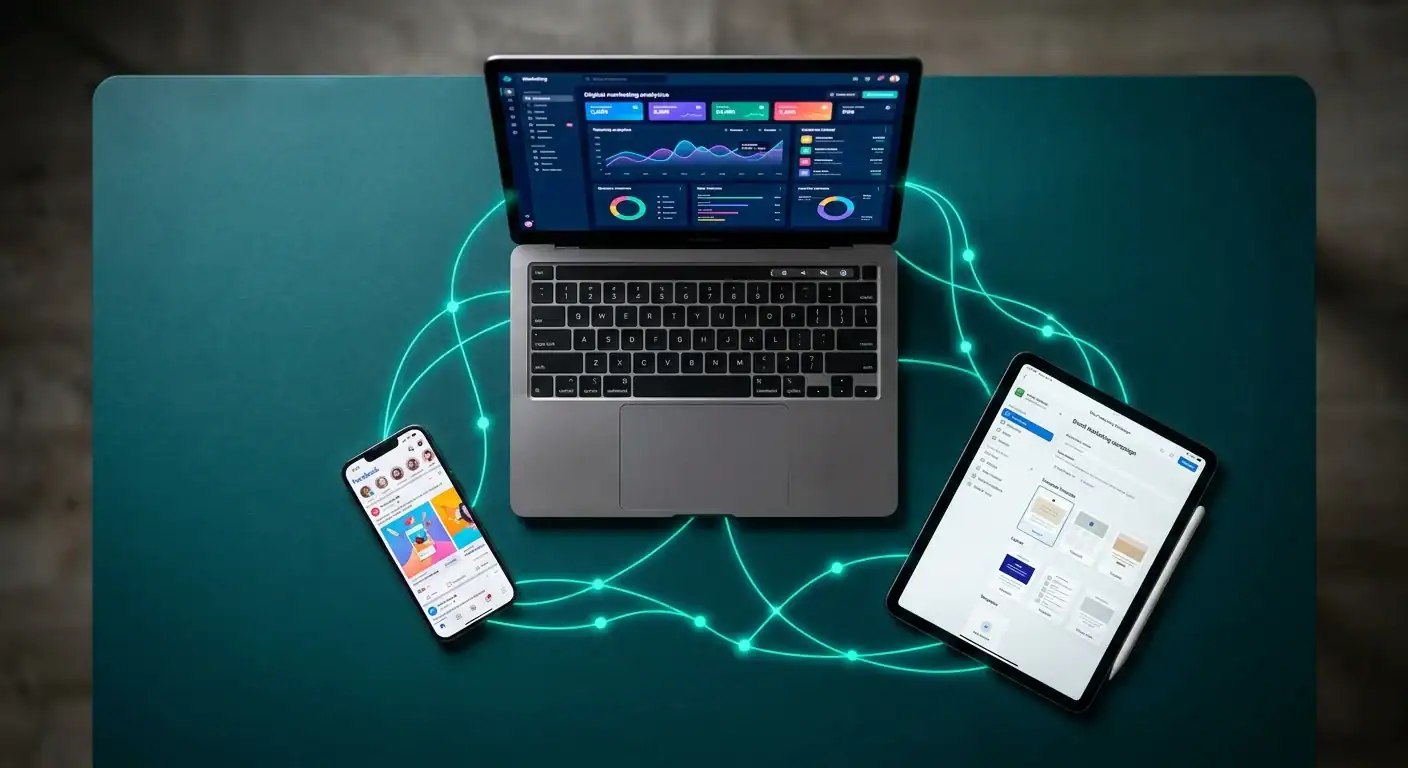
Blog to Email: Every blog post becomes email content. Write a post, send a summary to your list with a link. Drives traffic and keeps your list engaged.
Social Media to Email: Promote lead magnets on social to grow your list. Then use email to drive social engagement. The two channels feed each other.
Google Ads to Email: Use landing pages to capture emails alongside direct inquiries. Not every visitor is ready to call today, but many will give you their email for a valuable resource. Then nurture via email until they’re ready.
SEO to Email: Organic traffic brings people who trust your expertise. Capture their emails with lead magnets. Now you have a direct channel to warm prospects.
Your Email Marketing Action Plan

- This week: Choose a platform (HubSpot free, Mailchimp free). Create your account
- Next week: Create a lead magnet (checklist, guide, template). Build a signup form
- Week 3: Write a 5-email welcome sequence. Set it to auto-send to every new subscriber
- Week 4: Add signup forms to your website and social media. Start driving signups
- Monthly: Send 2-4 emails mixing value content and soft promotion. Track open and click rates
- Quarterly: Clean your list. Remove bounces and unengaged subscribers
Next Steps
Want help setting up your email marketing? Our AI marketing automation services include HubSpot setup, email sequence creation, and list building strategy. Combined with content marketing, we build the full lead generation pipeline.
Schedule a free consultation or call (321) 300-4837.
If this raised more questions than it answered, we’ve got answers to common AI Marketing questions in our FAQ — covering everything from pricing and timelines to what results actually look like. You can also read verified client reviews from businesses we’ve helped across Orlando and Central Florida.
The easiest way to stay consistent with your emails is to build them into a content calendar — here is how I do it for clients.
Email and social are stronger together — read my guide on social media ROI for small business to see how they complement each other in a full marketing mix.